
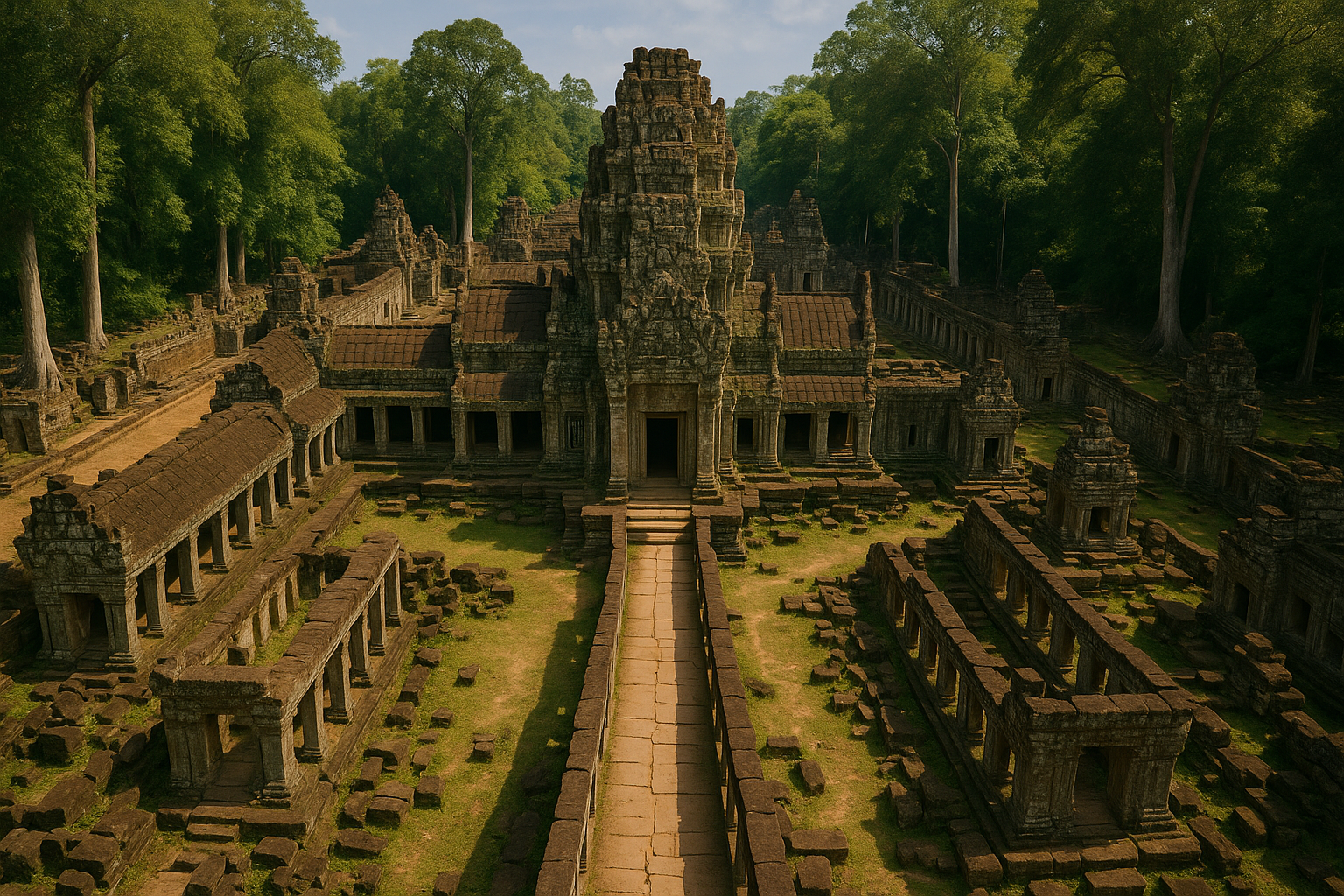
Of all the temples we visited in Cambodia, Prasat Preah Khan was one of the most surprising. It’s massive, mysterious, and somehow still quiet—despite being part of the Angkor Archaeological Park. Built by King Jayavarman VII, this former royal city-turned-temple is a place where nature and architecture collide in the best way. If you’re looking for an off-the-beaten-path feel without straying far from Siem Reap, here’s everything you need to know about exploring Preah Khan.
Experience Cambodia With Us!
Where Is Preah Khan?
Preah Khan is located just northeast of Angkor Thom, about 25–30 minutes by tuk-tuk from central Siem Reap. It’s part of the Grand Circuit, often visited after Angkor Wat and Bayon, but still blissfully less crowded.
A Quick History of Preah Khan
Built in the late 12th century by King Jayavarman VII, Preah Khan served as a temporary royal residence while Angkor Thom was under construction. It was also a Buddhist university, home to over 1,000 teachers and monks.
Dedicated to the king’s father, the temple was originally named Nagara Jayasri (meaning “City of Sacred Victory”). It once held golden statues, royal shrines, libraries, and grand ceremonial halls—many of which still stand, wrapped in jungle and stone.
What to See at Preah Khan
1. The Tree-Wrapped Entrances
As you approach, giant trees frame the gateways, roots curling around crumbling walls. It’s a jungle-meets-history scene that rivals Ta Prohm—but with fewer people.
2. Endless Corridors
Preah Khan is known for its long, linear passageways, many perfectly aligned with doorways that create stunning framed views. The symmetry, silence, and filtered light give it a dreamlike feel.

3. Buddhist and Hindu Carvings
Unlike many temples that were later converted, Preah Khan retains both Buddhist and Hindu elements—a rare blend. Look for delicate carvings of lotus flowers, apsaras (celestial dancers), and Garuda statues along the walls.
4. The Sacred Stele and Sanctuary
At the heart of the complex is a small sanctuary that once held the sacred stele (a carved stone pillar with temple records). The surrounding shrine feels hushed and intimate, still echoing the reverence it once commanded.
Why Visit Preah Khan?
- It’s quiet: Even during peak season, it’s often much less crowded than nearby temples.
- It’s massive: The complex covers over 56 hectares—there’s so much to explore.
- It’s atmospheric: With overgrown trees, fallen stones, and long corridors, it has that mystical, hidden-world vibe that Angkor lovers dream about.
- It’s photogenic: Light filtering through doorways, moss-covered carvings, and tree roots curling around towers—it’s a photographer’s playground.
Tips for Visiting
- Wear good shoes: The terrain is uneven, and you’ll be doing a lot of walking.
- Go early or late: For the best light and fewest people.
- Bring water: There’s minimal shade inside, and no vendors nearby.
- Take your time: The temple’s layout is a bit maze-like, so enjoy getting slightly lost—it’s part of the magic.
Final Thoughts
Preah Khan may not be the most famous temple in Cambodia, but it’s one of the most rewarding. There’s space to wander, quiet to reflect, and enough beauty to keep your camera clicking. It’s the kind of place that invites you to slow down and really feel the history around you.














Share your thoughts with us! Leave a Comment!