
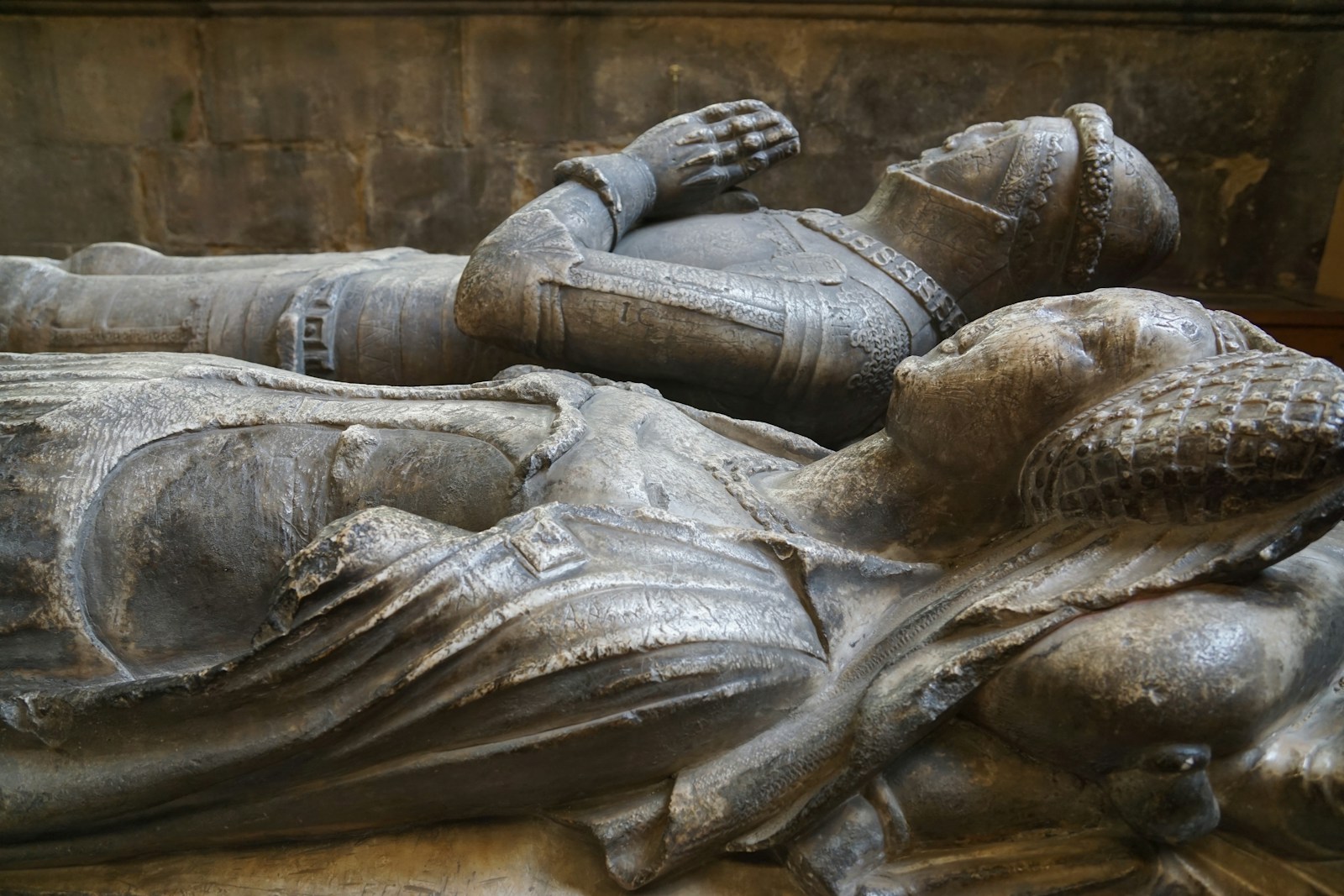
On our visit to Winchester Cathedral, we expected to be wowed by Gothic arches and historic grandeur—but we didn’t expect to walk among the bones of kings. Beneath and within this stunning cathedral lie the Saxon royal tombs, a mix of reverence, mystery, and ancient power. Here’s what makes them so captivating and why you should visit.
Get To Know The Traveling Taylors!
Who Is Buried in the Saxon Royal Tombs?
Winchester was once the capital of the ancient kingdom of Wessex, making it the final resting place for some of the earliest English monarchs. The cathedral holds the bones of:
- King Cynegils (d. 643) – First Christian king of Wessex
- King Cenwalh (d. 672) – Son of Cynegils
- King Egbert (d. 839) – Often considered the first King of all England
- King Ethelwulf (d. 858) – Father of Alfred the Great
- King Edward the Elder (d. 924) – Son of Alfred the Great
- King Edred (d. 955) – Grandson of Alfred the Great
These remains are held in beautifully decorated mortuary chests perched high above the choir screens. For travelers who want high-quality photos and videos during their trip, a lightweight mirrorless camera like this one is a popular choice among content creators and travel photographers.
What Makes These Tombs So Unique?
- Above-Ground Display: Unlike many royal tombs sealed away, these bones are in painted wooden chests visible to visitors.
- Mixed Remains: During the English Civil War, many tombs were looted or smashed, and the bones were mixed together. Recent studies aim to match remains to specific royals using DNA and isotope analysis.
- Saxon Lineage: It’s rare to find such a concentration of early English royalty in one place.
The Mystery Behind the Bones
The tombs were desecrated in 1642 by Parliamentarian troops who used the bones as projectiles and scattered them across the floor. For centuries, the identities of the bones remained uncertain.
- Modern Research: In 2015, archaeologists began a project to study and rebury the remains with greater accuracy.
- What They Found: Some bones were older than expected, others belonged to women (possibly royal consorts), and isotopic data provided clues about diet and origin.
Many travelers love bringing an instant camera like this one to capture fun memories at famous landmarks and print photos on the spot.
Tips for Visiting the Saxon Royal Tombs
- Join a Guided Tour: Tours give deeper insight into the Saxon history and architectural details.
- Visit the Choir Area: The chests are prominently displayed near the high altar.
- Check for Exhibitions: The cathedral occasionally hosts displays about the latest archaeological findings.
What Else to See at Winchester Cathedral
- Sound II by Antony Gormley: A haunting sculpture in the crypt
- Jane Austen’s Grave: The famous author is buried here
- The Great Screen: A stunning 15th-century backdrop behind the altar
Why the Saxon Royal Tombs Matter
These tombs connect modern England to its earliest kings—before the Norman Conquest, before Westminster Abbey, before London was the capital. They offer a tangible link to a time when Wessex ruled and Winchester was the heart of the kingdom.
Because long sightseeing days can drain your phone battery quickly, many travelers bring a slim portable power bank like this one to keep their devices charged while exploring.
Stepping Back in Time Among Saxon Royal Tombs
Walking among the Saxon royal tombs in Winchester Cathedral isn’t just about paying respects to long-dead kings. It’s about standing in a place where history breathes through stone, bone, and story. If you want to feel the weight of England’s ancient past, this sacred space delivers like no other.














Share your thoughts with us! Leave a Comment!