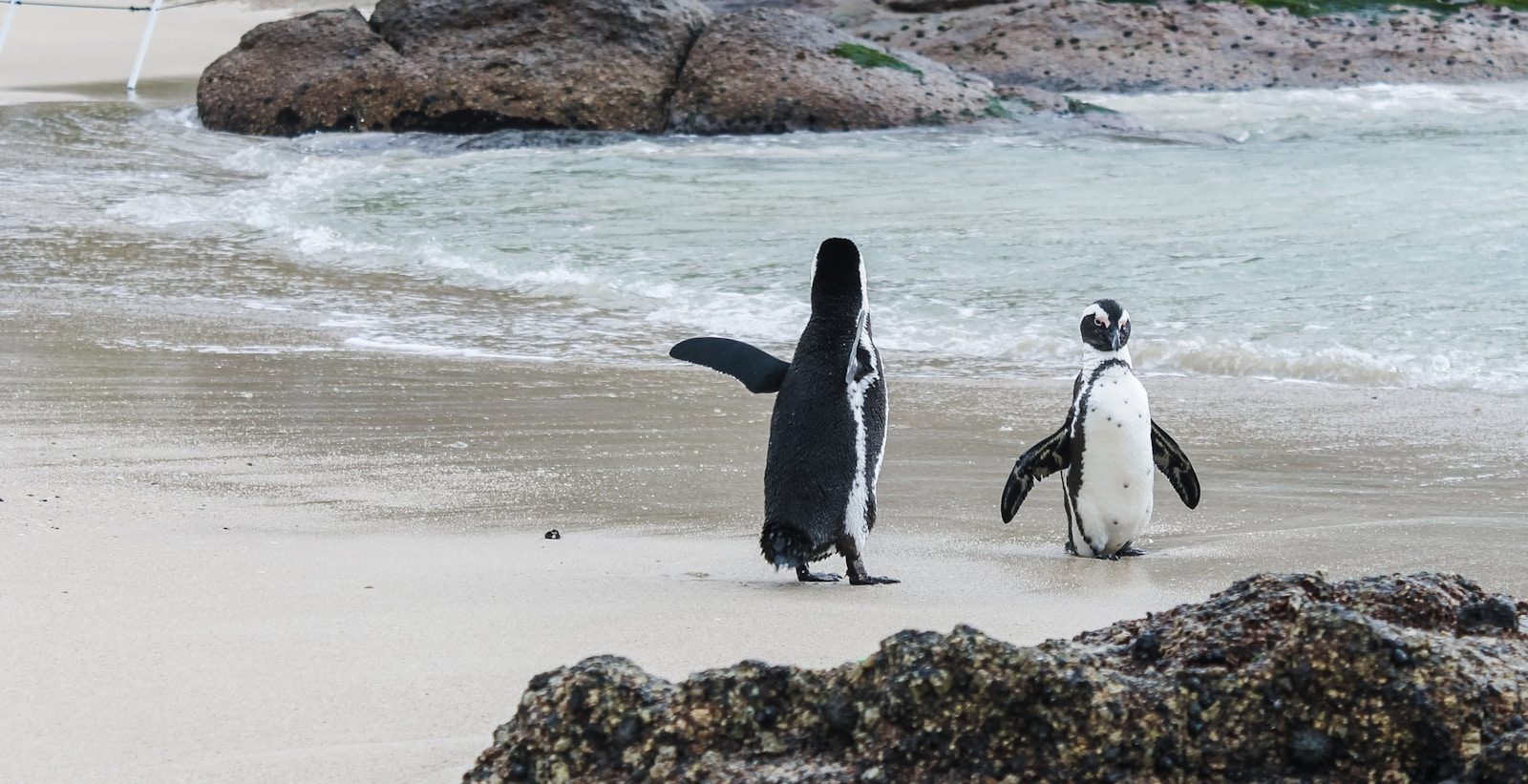
Before we visited Cape Town, we’d seen dreamy photos of penguins waddling along white-sand beaches, tourists sunbathing alongside them, and crystal-blue waters. Reality? Still magical—but also full of surprises. If you’re planning a trip to see Cape Town penguins, here are 7 things no one tells you before visiting.
Get To Know The Traveling Taylors!
1. Penguins Don’t Always Look Instagram-Ready
Most people expect penguins in sleek black-and-white coats. But during molting season (November–January), they shed old feathers and look patchy and scruffy. Don’t worry—they’re perfectly healthy, just not “picture perfect.”
Quick Tip: If photos are your priority, avoid peak molting season.
Just as penguins undergo self-care during molting season, self-care is important when traveling, especially after long sightseeing days, and many travelers like using a nourishing body oil like this one to help keep their skin soft and hydrated.
2. You Might Not Be Able to Swim With Them
Yes, there are photos of tourists floating next to penguins at Boulders Beach. But in reality, penguins don’t always swim near people. Sometimes they stick to the far rocks or avoid swimmers altogether. It’s their beach first—you’re just a guest.
Pro Tip: Go early morning for the best chance of penguin encounters in the water.
A waterproof phone pouch like this one is a great option for keeping your phone safe while still being able to take photos near the water if you’re lucky enough to join the penguins in a swim.
3. Boulders Beach Gets Packed Fast
Cape Town penguins at Boulders Beach are world-famous—and the crowds prove it. By midday, the boardwalks are full of tour buses, and the small beach can feel cramped. Some travelers like to use a compact crossbody-style fanny pack like this one when visiting Boulder Beach during peak times because it keeps valuables secure.
Local Hack: Arrive before 9 AM or after 4 PM for quieter moments. Prefer to skip the driving and parking? You can join a full-day Cape Point & Boulders penguins tour from Cape Town that times the stops for you.
4. Stony Point Is Cheaper (and Just as Good)
Most tourists only know about Boulders Beach. But Stony Point Nature Reserve in Betty’s Bay is home to another massive penguin colony. It’s quieter, cheaper, and has equally great boardwalks for penguin viewing.
Entry Fees (2025): Boulders = R190 (international adults), Stony Point = R30. Big difference!
Comfortable shoes are essential when walking the boardwalk, and many travelers recommend supportive walking sneakers like these for full days of sightseeing.
5. Penguins Can Bite—Hard
They may look cute, but African penguins have sharp beaks and strong jaws. If you get too close, they’ll defend themselves. That’s why fences and boardwalks exist.
Rule of Thumb: Keep at least a meter away and never try to touch or feed them.
6. You’ll Hear Them Before You See Them
African penguins aren’t silent—they bray like donkeys (hence their nickname, “jackass penguins”). The sound is funny, loud, and unexpected. Don’t be surprised if you start laughing before you even spot one.
7. Penguins Aren’t Just at the Beaches
Sure, Boulders and Stony Point are the stars. But penguins sometimes swim off Robben Island or even pop up near Cape Town’s harbors. Keep your eyes on the water—you might get a surprise sighting for free so it’s a good idea to have your camera ready. Many travelers love bringing an instant camera like this one to capture fun memories at famous landmarks and print photos on the spot.
Cape Town Penguins
Seeing Cape Town penguins is one of the city’s most unique and unforgettable experiences—but it’s not always the perfectly polished postcard version. Between molting feathers, funny donkey sounds, and crowded boardwalks, the reality is messy, authentic, and even more special than the photos.
If you want the full story of Cape Town beyond the Instagram highlights, check out our Cape Town Khayelitsha guide for culture, creativity, and community.
Ready to plan the day? See our full Cape Town Boulders Beach guide, or compare every colony in our roundup of the best beaches to see Cape Town penguins.