
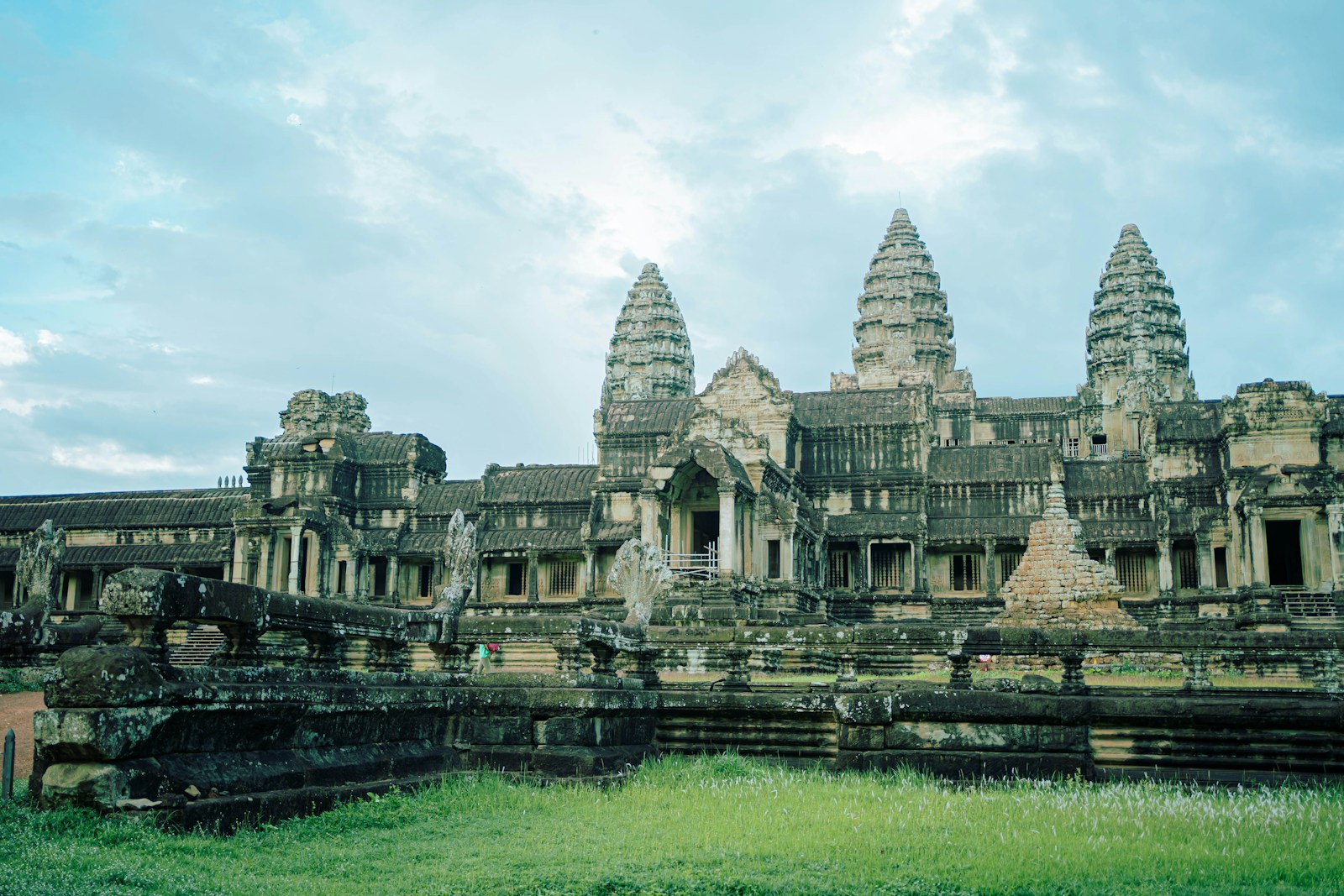
It’s easy to get lost in the wonder of Angkor Wat, but just a few minutes away lies something even more mysterious—Angkor Thom. This massive walled city was the Khmer Empire’s final capital, a bold vision of power, protection, and spiritual symbolism. Exploring its quiet gates, stone faces, and hidden corridors feels like time travel. Here’s the story of Angkor Thom—how it rose, what it represents, and why it still captivates travelers today.
Experience Angkor Thom With Us!
A Royal City With a Bold Vision
Built in the late 12th century by King Jayavarman VII, Angkor Thom (meaning “Great City”) was created after the empire suffered repeated attacks. The king responded not just with defense, but with grandeur—designing a capital that would reflect both divine order and military strength. To visit with a knowledgeable guide, you can join a small-group Angkor temples tour.
Its walls stretch over 3 kilometers on each side, enclosing a space of more than 9 square kilometers. At its heart sits Bayon, the king’s state temple, filled with faces that reflect both his spiritual vision and political reach.
Exploring new places often means taking lots of photos and videos and Angkor Thom is no different, which is why many travelers bring a smart face-tracking phone tripod like this one to record hands-free while walking around.
Sacred Geometry and Symbolism
Angkor Thom isn’t just big—it’s deeply symbolic. The entire city is laid out according to Hindu cosmology:
- The square layout represents the universe
- The central temple, Bayon, symbolizes Mount Meru—the home of the gods
- The surrounding moat stands in for the cosmic ocean
Even the five entrance gates (one in each cardinal direction and two at the east) are flanked by statues of gods and demons engaged in the Churning of the Ocean of Milk, a creation myth from Hinduism. Everything was designed to show the king as a divine ruler at the center of a well-ordered universe. For travelers who want high-quality photos and videos of the entrances, especially the South Gate, a lightweight mirrorless camera like this one is a popular choice among content creators and travel photographers.

Bayon: The Temple of Faces
Bayon is the spiritual heart of Angkor Thom and its most iconic structure. It’s known for over 200 enigmatic stone faces—serene, smiling, and facing in all directions. These are believed to represent either Jayavarman VII himself or the bodhisattva Avalokiteshvara, radiating compassion and divine authority.
Beneath the towers, richly carved bas-reliefs tell stories of daily life, battle scenes, and ceremonial events, giving us a rare glimpse into Khmer society. Many travelers recommend an ultimate travel action camera like this for capturing stunning photos and videos of the Temple of Faces in incredible detail.
Other Highlights Inside Angkor Thom
- Baphuon Temple: A steep, pyramid-like structure that predates Bayon. It’s one of the largest restoration projects in Southeast Asia.
- Terrace of the Elephants: Once the royal viewing platform, decorated with elephant carvings and used for grand processions and ceremonies.
- Terrace of the Leper King: A smaller platform with hidden inner walls covered in stunning, well-preserved carvings—possibly related to the god of death or a legendary king.
- Phimeanakas & Royal Palace Area: These less-visited ruins hint at the grandeur of royal life, surrounded by moats and gardens.
A Legacy That Endures
Angkor Thom was the last great capital before the Khmer Empire began to decline. Though it eventually fell into disuse, its architecture, symbolism, and scale still speak of a civilization that once ruled much of Southeast Asia. Walking through its gates today, you can feel the weight of centuries—and the brilliance of a kingdom that dreamed in stone. Some travelers memorialize their experience at Angkor Thom with a keepsake journal like this one thoughtfully designed for travelers who love capturing memories, documenting adventures, and preserving the fun of every trip.
Visiting Angkor Thom
Angkor Thom isn’t just a stop on the temple circuit—it’s a city of meaning, majesty, and mystery. Understanding its story brings a deeper appreciation to every tower, terrace, and temple you explore. It’s a place where history lives, etched in sandstone and silence.
Ready to walk in the footsteps of Khmer kings? Pair your visit to Angkor Thom with our Guide to Angkor Wat!
















Share your thoughts with us! Leave a Comment!