
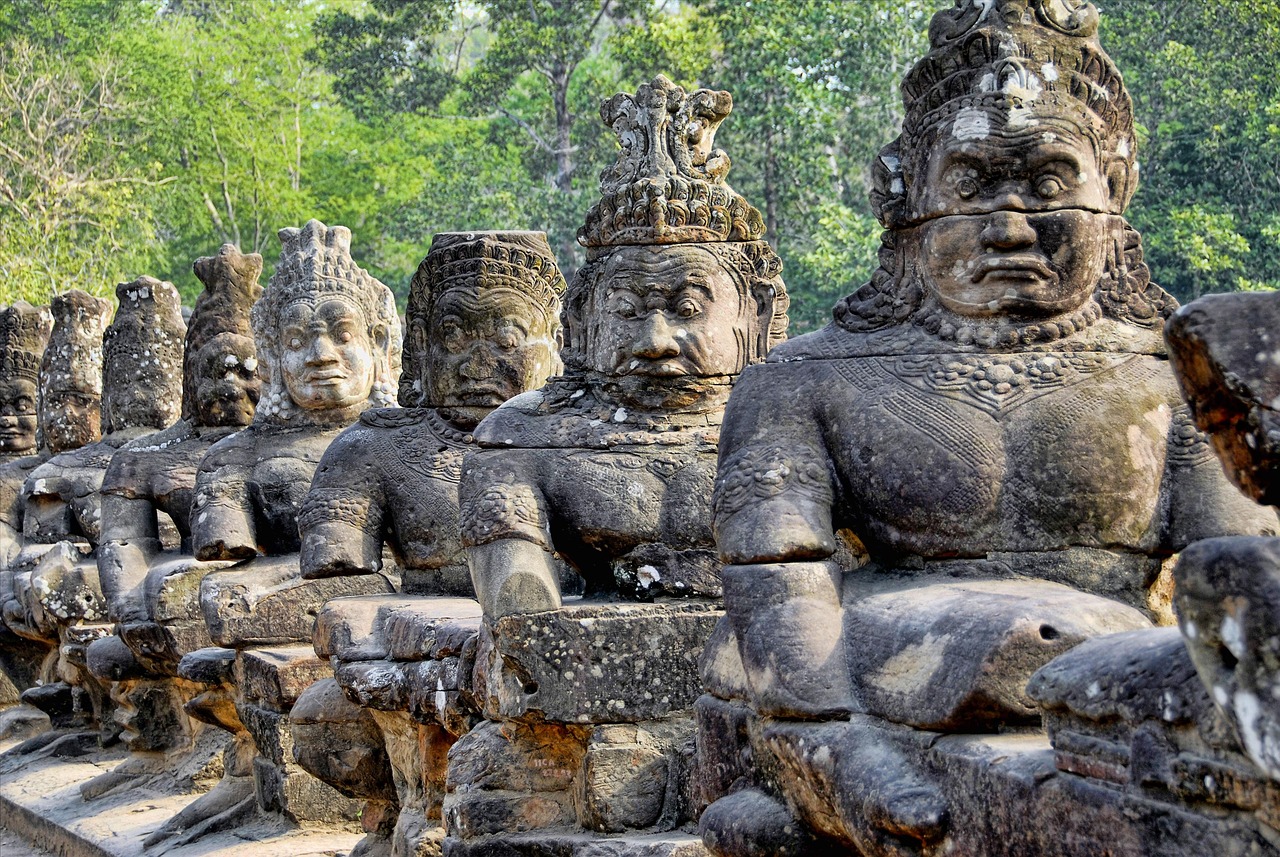
There’s something surreal about standing at Bayon Temple, surrounded by dozens of massive stone faces that seem to smile down at you from every direction. Located at the heart of Angkor Thom, Bayon is one of Cambodia’s most recognizable temples—and its enigmatic faces are what make it unforgettable. During our visit, we couldn’t stop wondering: Who are they? What do they mean? This blog dives into the mystery, mythology, and meaning behind Bayon’s most iconic feature.
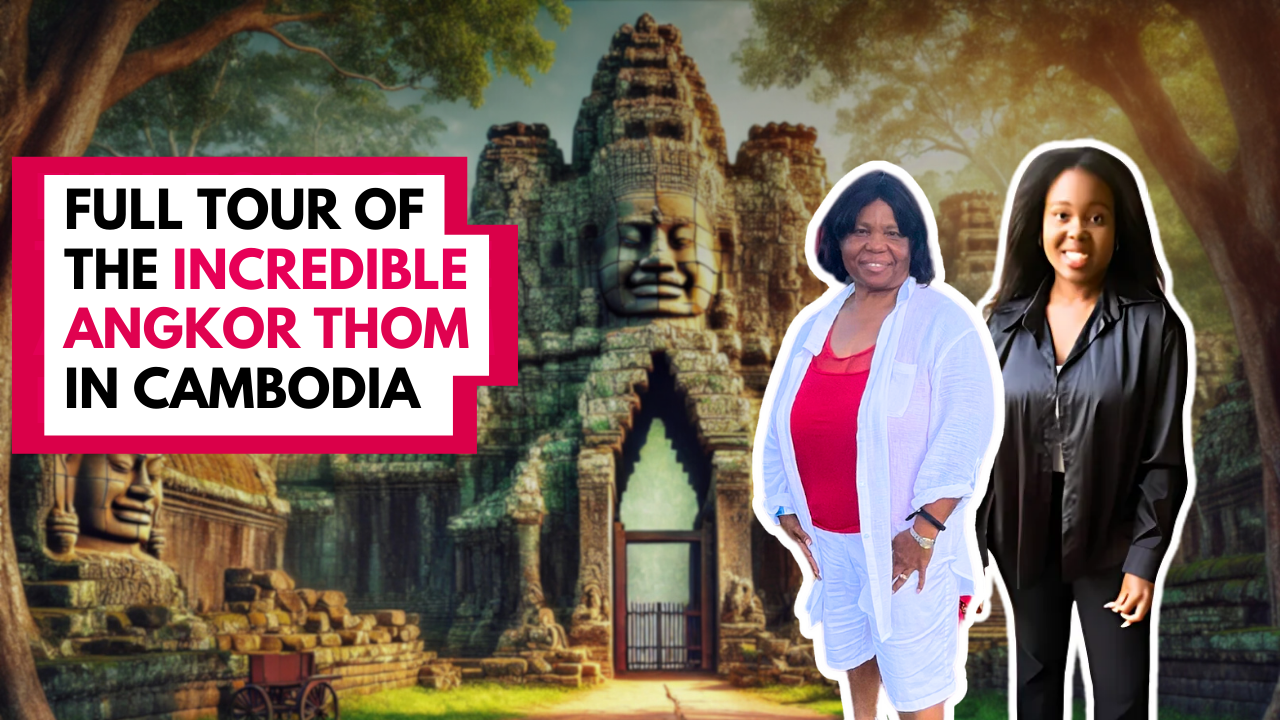
Experience Angkor Thom With Us!
A Temple Unlike Any Other
Bayon was built in the late 12th to early 13th century by King Jayavarman VII, one of the Khmer Empire’s most powerful and devout rulers. Unlike the linear, symmetrical design of Angkor Wat, Bayon is complex, chaotic, and circular—almost maze-like.
But what sets it apart are the over 200 giant stone faces carved into the temple’s towers. Serene, slightly smiling, and gazing in all directions, these faces are the soul of Bayon. For travelers who want high-quality photos and videos of Bayon, a lightweight mirrorless camera like this one is a popular choice among content creators and travel photographers.
Who Do the Faces Represent?
There are two main theories—and both say a lot about Khmer spirituality and politics.
1. Avalokiteshvara, the Bodhisattva of Compassion
This theory suggests the faces depict Avalokiteshvara (or Lokesvara in Khmer), a key figure in Mahayana Buddhism who embodies mercy and compassion. Jayavarman VII was a Mahayana Buddhist, and aligning himself with Avalokiteshvara would have signaled both religious devotion and divine support.
2. Jayavarman VII Himself
Another widely accepted theory is that the faces represent Jayavarman VII, portrayed with spiritual symbolism. This would reinforce his role as a “god-king” (devaraja)—a leader whose rule was both political and divine. The calm, watchful faces reflect authority, wisdom, and ever-present power.
Most likely, it’s a blend of both—blurring the lines between king and god, mortal and divine. Some travelers memorialize their experience at Bayon with a keepsake journal like this one thoughtfully designed for travelers who love capturing memories, documenting adventures, and preserving the fun of every trip.

The Smiling Expression: What Does It Mean?
The expression is famously described as the “Mona Lisa smile of Southeast Asia.” It’s calm, mysterious, and gently amused. That subtle smile is believed to symbolize:
- Divine serenity and balance
- Compassion toward all beings
- The king’s omnipresence and benevolent rule
No matter where you stand, you’re being watched—but not in an ominous way. The faces project peace and protection. For solo travelers or couples exploring busy attractions, a smart face-tracking phone tripod like this one can automatically follow your movement and help capture great videos of the smiling faces hands-free.
Symbolism in Every Direction
The faces are typically set in groups of four, each looking toward one of the cardinal directions—north, south, east, and west. This design symbolizes:
- The king’s universal reign over the land
- Omnipresence of divine wisdom
- The balance of the cosmos, a recurring theme in Khmer architecture
It’s all part of how the Khmer Empire used temples not just for worship, but as political and cosmic statements.
Why It Still Captivates Us Today
There’s something about the faces of Bayon that draws people in. Maybe it’s the scale, maybe the mystery—but more than anything, it’s the feeling. They exude calm in a place that once echoed with royal ceremonies, processions, and prayers.
When you stand among them, you feel seen. Not judged—just witnessed. And that feeling lingers long after you leave. Many travelers love bringing an instant camera like this one to capture fun memories at famous landmarks and print photos on the spot.
Bayon Temple, Mona Lisa Smile of Southeast Asia
Bayon Temple is more than just an architectural wonder—it’s a spiritual puzzle, a political statement, and a hauntingly beautiful place to pause. The faces are a reminder of Cambodia’s rich, layered history and the way art, power, and belief come together in the temples of Angkor.










Share your thoughts with us! Leave a Comment!