
During our travels through Cambodia, one thing that surprised us was just how unique the money system is. Whether you’re visiting the ancient temples of Angkor Wat (like we did- click here to watch 📼) or wandering through Phnom Penh’s markets, understanding how Cambodia’s currency works will make your trip a whole lot smoother. Here’s a practical guide to navigating money in Cambodia.
Experience Cambodia With Us!
Cambodia’s Dual Currency System
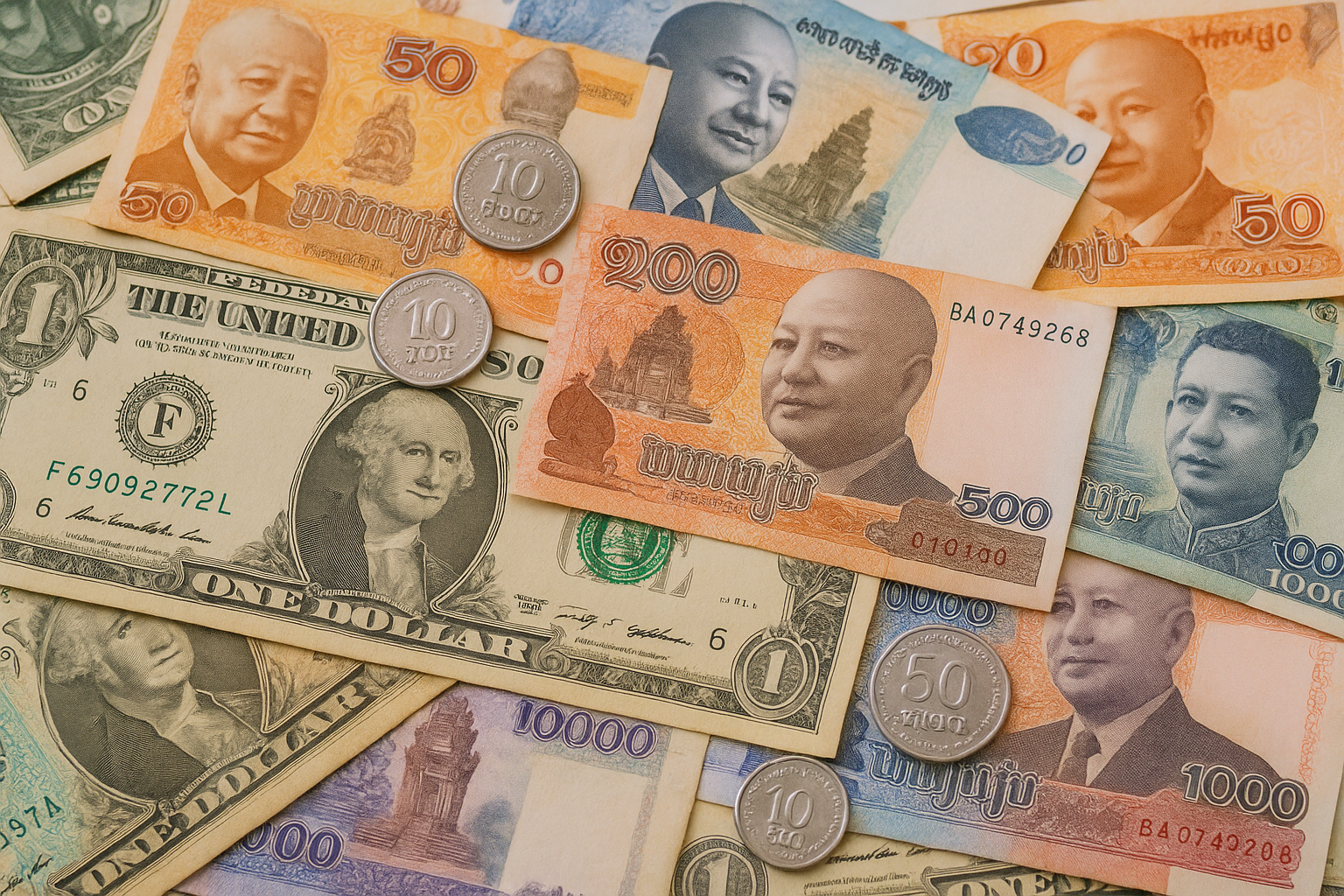
Cambodia uses two official currencies side-by-side: the Cambodian Riel (KHR) and the US Dollar (USD). This can be a bit confusing at first, but most transactions—especially in tourist areas—are done in USD. Riel is typically used for change under \$1 or for smaller purchases at local shops and markets.
- Exchange rate: Roughly 4,000 Riel = 1 USD (this can fluctuate slightly)
- Bills you’ll see: US coins aren’t used; instead, change is given in Riel
- Where it matters: Tuk-tuks, street food, and local stalls are more likely to use Riel, while hotels and restaurants price in USD
Some travelers like carrying a compact crossbody-style fanny pack like this one for keeping their Riel and USD secure and easily accessible while walking through busy areas in Cambodia.
Where to Get Money in Cambodia
- ATMs: Widely available in cities like Siem Reap and Phnom Penh. Most dispense USD, but some offer Riel too.
- Currency exchange: Exchange counters are common at airports and in tourist hubs. Rates are fair, but always count your money.
- Credit cards: Accepted in major hotels and high-end restaurants, but not common elsewhere. Always carry cash for day-to-day spending. For travelers who want quick access to cash, a compact wristlet wallet like this one is perfect for carrying Riel or USD while walking around.
Quick Tip: Opt for newer, undamaged US bills. Torn or overly worn notes might be rejected.

Tipping, Bargaining, and Money Etiquette
- Tipping: Not required, but always appreciated. Rounding up a bill or leaving small change is common in restaurants.
- Bargaining: Expected in markets and with tuk-tuk drivers. Be polite and have fun with it—it’s part of the experience.
- Small bills matter: Vendors often don’t have change for large denominations, so carry plenty of \$1s and small Riel notes.
Cambodia is mostly cash-based, so it’s wise to have small amounts on hand each day. Here’s a rough idea of common costs:
How Much Cash Should You Carry?
- Tuk-tuk ride (short distance): \$1–\$3
- Local meal: \$2–\$5
- Bottle of water: \$0.50
- Entry to Angkor Wat: \$37/day (USD only)
Store your main cash and cards securely and use a small pouch or money belt when exploring. Many travelers like using a slim RFID-blocking wallet like this one because it keeps credit and debit cards and cash secure while taking up very little space in your pocket or travel bag.
Using Cambodian Riel Outside Cambodia?
The Cambodian Riel has very limited use outside of the country and cannot be exchanged easily once you leave. Try to use up your Riel before departing, especially coins and small notes. USD, on the other hand, can easily be reused on future trips or exchanged elsewhere.
Which to Use, Riel or USD
While Cambodia’s dual currency setup might seem complicated at first, it quickly becomes second nature. With a bit of planning and the right denominations in your pocket, you’ll be ready to navigate markets, temples, and tuk-tuk rides like a pro. Embrace the local rhythms, and let the experience—not the exchange rate—be your focus.















Share your thoughts with us! Leave a Comment!