
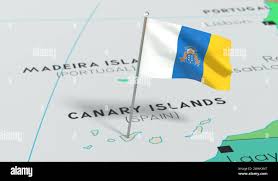
When we first started exploring the islands, we noticed the colorful Canary Islands flag flying everywhere — from town halls to harbor promenades. At first glance, the flag looks simple, but the Canary Islands flag actually represents an important part of the islands’ identity and history.
Get To Know The Traveling Taylors!
Like many regional flags, the design tells a story about geography, culture, and political heritage. Understanding the Canary Islands flag helps travelers appreciate how the islands see themselves within Spain while maintaining a unique regional identity.
Considering a visit to this destination? Make sure to maximize suitcase space by using compression travel bags like these, which help reduce the bulk of clothing while packing.
The three bold colors of the Canary Islands flag represent both the islands themselves and their connection to the surrounding Atlantic Ocean.
Canary Islands Flag Design
The design of the Canary Islands flag is simple and distinctive. It consists of three vertical stripes of equal width.
The stripes appear in the following order from left to right:
• White
• Blue
• Yellow
Many official versions of the Canary Islands flag also include the regional coat of arms placed in the center of the blue stripe. However, the simpler version without the crest is also commonly used throughout the islands.
Despite its straightforward design, the colors of the Canary Islands flag carry meaningful symbolism connected to the history of the archipelago.
Canary Islands Flag Color Meaning
Each color in the Canary Islands flag represents an important element of the islands’ geography and political structure.
White
The white stripe represents the province of Santa Cruz de Tenerife. This province includes islands such as Tenerife, La Palma, La Gomera, and El Hierro.
Blue
The blue stripe symbolizes the Atlantic Ocean that surrounds the islands. The ocean has played a crucial role in the history, trade, and culture of the archipelago.
Yellow
The yellow stripe represents the province of Las Palmas, which includes Gran Canaria, Fuerteventura, and Lanzarote.
Together, these three colors unify the islands under the Canary Islands flag, representing both provinces and their shared connection to the ocean.
Reading about a place is one thing, but experiencing it in person is even better. Travel often means carrying extra gear, and a durable travel backpack like this one helps keep everything organized throughout the day.
Canary Islands Flag and Regional Identity
Although the Canary Islands are an autonomous region of Spain, the Canary Islands flag represents the distinct identity of the archipelago.
The islands have their own government, traditions, and cultural characteristics that differ slightly from mainland Spain. The Canary Islands flag helps express this regional pride.
It symbolizes the unity of the islands while still acknowledging their historical ties to Spain.
You’ll often see the Canary Islands flag displayed alongside the Spanish national flag in official locations across the archipelago.
Canary Islands Flag in Daily Life
While visiting the islands, it’s easy to spot the Canary Islands flag in many everyday settings.
The flag appears frequently in:
• Government buildings
• Ports and marinas
• Schools and public institutions
• Festivals and cultural celebrations
Residents often display the Canary Islands flag during local events and holidays as a symbol of pride in their island heritage.
The flag has become an important visual symbol representing the entire archipelago.
Canary Islands Flag and the Coat of Arms
In its official form, the Canary Islands flag includes the regional coat of arms placed in the center.
The crest features a shield showing the seven main islands of the archipelago. On each side of the shield stand two dogs, referencing the historical name of the islands.
Above the shield sits a royal crown, symbolizing the islands’ connection to Spain.
While the coat of arms adds historical detail, the three colored stripes remain the defining feature of the Canary Islands flag.
Exploring new places often means taking lots of photos and videos, which is why many travelers bring a smart face-tracking phone tripod like this one to record hands-free while walking around.
Why the Canary Islands Flag Is Meaningful
The Canary Islands flag represents far more than just a simple design. It reflects the geography, history, and unity of the islands. The colors connect the two historic provinces, the surrounding Atlantic Ocean, and the shared identity of the archipelago. For visitors, noticing the Canary Islands flag flying across towns and harbors offers a small glimpse into the pride residents feel for their islands. Learning about the meaning behind the Canary Islands flag helps travelers better understand the culture and heritage that make the Canary Islands such a unique destination in Europe. 🌴🏳️✈️
















Share your thoughts with us! Leave a Comment!