
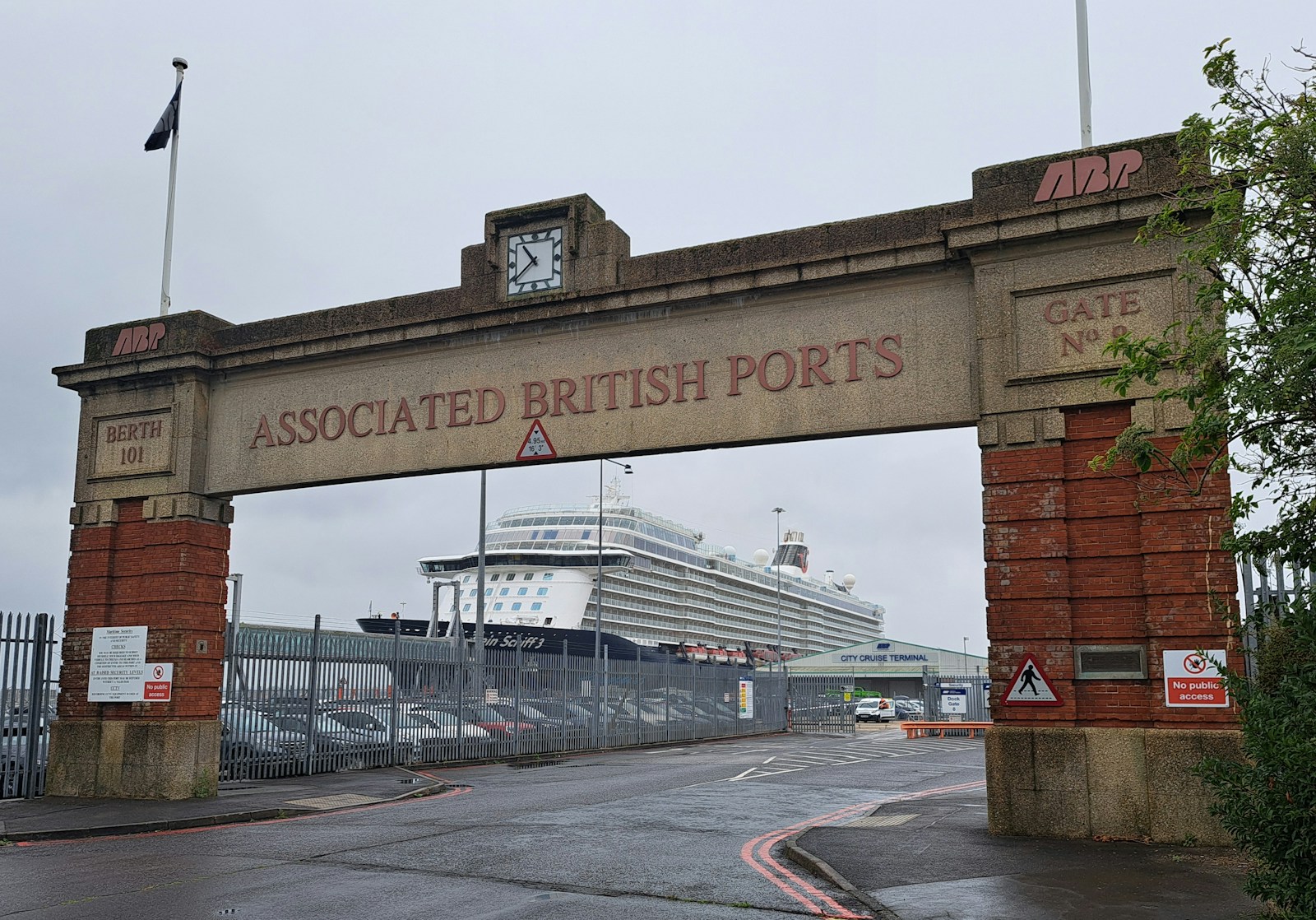
Today, Southampton is one of Europe’s busiest cruise ports, welcoming millions of passengers each year. But behind the modern terminals and luxury liners lies a port steeped in history—from Roman trade routes to transatlantic giants like the Titanic. Whether you’re visiting before a cruise or just curious about the city’s past, here’s how Southampton Port’s history shaped the city and the world beyond.
Get To Know The Traveling Taylors!
🛶 Roman Beginnings: Southampton’s Early Trade Roots
Southampton’s story begins with the Romans, who established a port near present-day Bitterne Manor.
- The River Itchen provided access to inland trade routes.
- Roman Southampton (then called Clausentum) thrived as a minor port and military site.
⚱️ Artifacts from this era can still be seen at the Southampton City Museum and in local archaeology displays. For travelers who want high-quality photos and videos during their trip, a lightweight mirrorless camera like this one is a popular choice among content creators and travel photographers.
⚓ Medieval Growth and Wool Trade
In the medieval period, the port relocated to its current location and quickly grew in importance:
- Southampton became a key departure point for English armies during the Hundred Years’ War.
- Wool exports to Flanders and France made the city prosperous.
- The medieval walls and Bargate (still standing today) were built to defend the growing port town.
🧱 You can walk stretches of these ancient walls today as part of the Old Town trail.
Comfortable shoes are essential when exploring Southampton on foot, and many travelers recommend supportive walking sneakers like these for full days of sightseeing.
🛳️ Age of Empire: Expansion into the Modern Port
The 18th and 19th centuries brought rapid change:
- New docks were built to accommodate larger cargo ships and steam vessels.
- Southampton became a hub for emigrants heading to North America, Australia, and beyond.
- The introduction of the railway in 1840 connected the port to London and made it a vital cargo and passenger link.
🚂 The synergy of rail and sea travel cemented Southampton as a gateway to the world.
🚢 Titanic and the Golden Age of Ocean Liners
Southampton’s most famous (and tragic) chapter came in 1912, when the RMS Titanic departed from what is now Dock Gate 4.
- Over 500 crew members were locals.
- The disaster deeply impacted the city—almost every street lost someone.
- Titanic’s departure point is now part of the Walk the Titanic Tour and marked by commemorative plaques.
🕯️ The story is beautifully told at the SeaCity Museum, just minutes from the original port area.
⚔️ World Wars and Post-War Rebuilding
Southampton Port played a major role in both World Wars:
- WWI: Troop ships and military cargo departed from its docks.
- WWII: It was a key launch point for D-Day and heavily bombed by the Luftwaffe.
🏗️ After the war, the port was rebuilt and modernized, with a focus on commercial shipping and ferry services.
🚢 Cruise Capital: The Port Today
Fast forward to today, and Southampton Port is one of the top cruise terminals in Europe.
- Home to Carnival UK (P&O, Cunard) and frequently visited by Royal Caribbean and MSC.
- Four major cruise terminals serve millions annually.
- It’s also a key cargo port, handling everything from vehicles to containers.
🏨 The surrounding areas—Ocean Village, Mayflower Park, and Westquay—have grown with it, offering modern hotels, shops, and restaurants for travelers.
Some travelers use a compact crossbody-style fanny pack like this one because it keeps valuables secure while walking through busy areas.
🧭 A Port That Shaped a City (and a Nation)
From Roman roots to the Titanic and beyond, Southampton Port has shaped more than just a city—it’s helped shape global history. It’s been a place of departure, tragedy, trade, and transformation. Whether you’re passing through on a cruise or digging into England’s maritime past, the port’s story is worth a closer look.














Share your thoughts with us! Leave a Comment!