
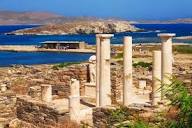
When we first stepped off the ferry onto Delos, we were struck by the eerie silence. No locals, no hotels, not even a snack bar in sight. It felt like walking through a frozen snapshot of the ancient world. But why is Delos—once a bustling religious and trade hub—completely empty today? The answer lies in its sacred past, strict preservation laws, and a few surprising myths.
Get To Know The Traveling Taylors!
Why No One Lives on Delos Anymore
Delos was once one of the most important religious centers in the ancient Greek world, believed to be the birthplace of the twin gods Apollo and Artemis. But today, the island is utterly uninhabited. No permanent residents, no businesses, not even a caretaker living overnight.
Here’s why:
- Religious Sanctity: Ancient Athenians declared the island sacred and “purified” it by removing all graves and forbidding births and deaths on the island.
- Modern Protections: Delos is a UNESCO World Heritage Site, and Greek law strictly prohibits any modern development or overnight stays.
Quick Fact: Even archaeologists and staff must leave by the last ferry—no one sleeps on Delos, ever.
Because you’ll likely be outside for hours visiting landmarks and viewpoints, bringing UV-protective sunglasses like these can help keep your eyes comfortable throughout the day.
You Can Visit—But You Can’t Stay
Delos is open to visitors, but only as a day trip. Boats run from nearby Mykonos, and the entire island is open-air, meaning:
- No restaurants or cafes
- No bathrooms outside the entrance
- No shade or shelter
Pro Tip: Bring water, sunscreen, and snacks—you won’t find them on the island. Staying hydrated during long sightseeing days is important, so many travelers carry a collapsible water bottle like this one that folds flat when it’s empty.
The Myths That Shaped Delos’s Destiny
Delos’s emptiness isn’t just practical—it’s also steeped in myth. According to legend:
- Leto, pregnant with Zeus’s twins, found refuge on Delos after being chased by Hera.
- Apollo and Artemis were born under a palm tree near what’s now the Sacred Lake.
This origin story elevated Delos to divine status. As a result, ancient laws banned life events like births and deaths to preserve its purity—traditions that echo in today’s regulations.
Why You Still Should Visit Delos
Despite its ghost-town feel, Delos is a must-see for history lovers and mythology fans. The lack of modern life makes the ruins feel more authentic, more haunting, and more alive in their stillness. To bring the temples and mosaics to life, you can join a guided tour of the Delos ruins and museum.
Top things to do:
- Explore the Terrace of the Lions
- Climb Mount Kynthos for sweeping Aegean views
- Marvel at ancient mosaics in the residential quarter
Bonus Tip: Visit early or late in the day to avoid the harsh midday sun and the biggest tour groups. Because long sightseeing days can drain your phone battery quickly, many travelers bring a slim portable power bank like this one to keep their devices charged while exploring.
The Silent Soul of Delos
Delos’s emptiness isn’t a flaw—it’s the feature. Walking its ancient paths in silence, with no hum of modern life, connects you to something older and deeper than any busy tourist town could. It’s a rare window into a world that’s long gone, preserved in near-perfect stillness.














Share your thoughts with us! Leave a Comment!