
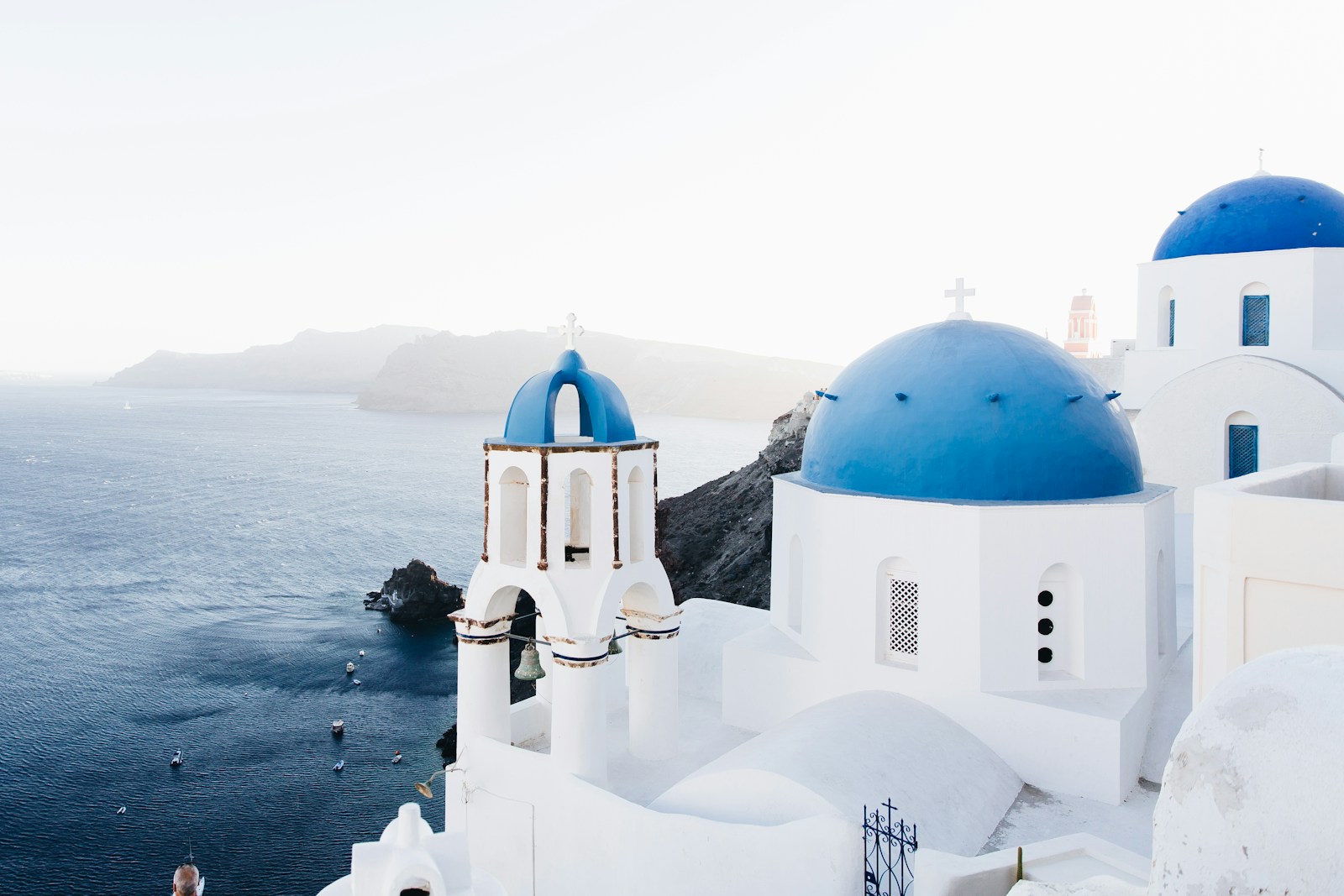
You’ve seen them on postcards, calendars, and a thousand Instagram feeds—but what’s the real story behind Santorini’s blue domes? We were curious too, so during our visit, we dug into the history, symbolism, and reasons these blue-topped churches became the ultimate symbol of Greece. Here’s what we discovered—and how to experience them for yourself.
Get To Know The Traveling Taylors!
🔵 The Blue Domes Aren’t Random—They’re Intentional
While the bright white buildings of Santorini are instantly recognizable, it’s those deep cobalt blue domes that truly define the island’s look.
Why blue?
- Blue reflects the colors of the Greek flag—white for purity, blue for the sea and sky.
- Culturally, blue is believed to ward off evil (just like the blue “mati” or evil eye amulets).
- From a practical standpoint, blue absorbs less heat than darker colors and was often the only paint available that locals could afford or mix themselves.
For travelers exploring Santorini, a smart face-tracking phone tripod like this one can automatically follow your movement and help capture great videos hands-free.
🏛️ The Three Famous Blue Domes in Oia
The iconic photo you’ve seen everywhere? It’s of three blue-domed churches in Oia, tucked behind a small alley off the main pedestrian path.
These include:
- Agios Spiridonas
- Anastaseos tou Kyriou (Resurrection of the Lord)
- A third unnamed chapel
Pro tip: They’re located near the Castle of Oia—look for a narrow stairway across from the Ekklisia Panagia Platsani church.
Some travelers also carry a mini portable charger like this one in their pocket or bag so they always have backup battery power for maps, photos, and ride apps.
🧱 Dome Architecture: A Cycladic Tradition
The domes aren’t just decorative—they’re functional.
- The rounded shape distributes weight evenly, perfect for the island’s rocky terrain.
- Blue domes cap many Orthodox churches in the Cyclades, not just Santorini, but they stand out here thanks to the dramatic cliffside backdrops.
🎨 Not All Blue Domes Are the Same Shade
We were surprised to notice that not all blue domes in Santorini are exactly the same hue. Some are deep navy, others a softer sky blue.
Why the variation?
- Paints are locally mixed and sometimes fade differently due to sun exposure.
- Churches repaint regularly to maintain their pristine appearance, often using whatever shade is available or historically used on-site.
🙏 Blue Domes with Meaning: Symbolism in Orthodox Churches
Blue domes often symbolize heaven and divine protection in Greek Orthodox architecture.
Inside, you’ll typically find:
- Beautiful icons and candle-lit interiors
- A calm, reverent atmosphere
- Murals or mosaics of saints and biblical scenes
Note: Many churches are closed except during services, but peeking inside respectfully is usually welcome.
It’s fun to read about a destination, but nothing compares to actually being there. Many travelers prefer a compact crossbody-style fanny pack like this one because it keeps essentials secure while walking through busy areas.
🧭 Other Notable Blue Domes Around Santorini
While Oia’s are the most famous, you’ll find beautiful blue domes across the island:
- Firostefani: The Church of Agios Theodoros offers one of the best photo angles with caldera views.
- Imerovigli: Quiet, peaceful domes perfect for golden hour shots.
- Pyrgos: Dome churches are nestled among narrow paths and offer amazing hilltop views.
📸 So… Why Did These Domes Go Viral?
A few reasons:
- Greek tourism campaigns featured them in the 1990s and early 2000s.
- Social media made them instantly iconic—they’re simple, striking, and visually unforgettable.
- They capture the essence of the Greek islands in a single frame: whitewashed walls, blue skies, church bells, and sea views.
If you’re visiting multiple attractions throughout the day, attaching an Apple AirTag like this one to your bag or luggage can give you peace of mind in case something gets misplaced.
📖 The Blue Domes: More Than Just a Pretty Picture
Now that you know the story behind Santorini’s blue domes, you’ll see them with fresh eyes. They’re not just photogenic—they’re symbols of faith, culture, and resilience that have become a defining image of Greece.
Planning your visit? Don’t miss our 11 Santorini Attractions You Didn’t Know Existed for more unexpected island gems.











Share your thoughts with us! Leave a Comment!