
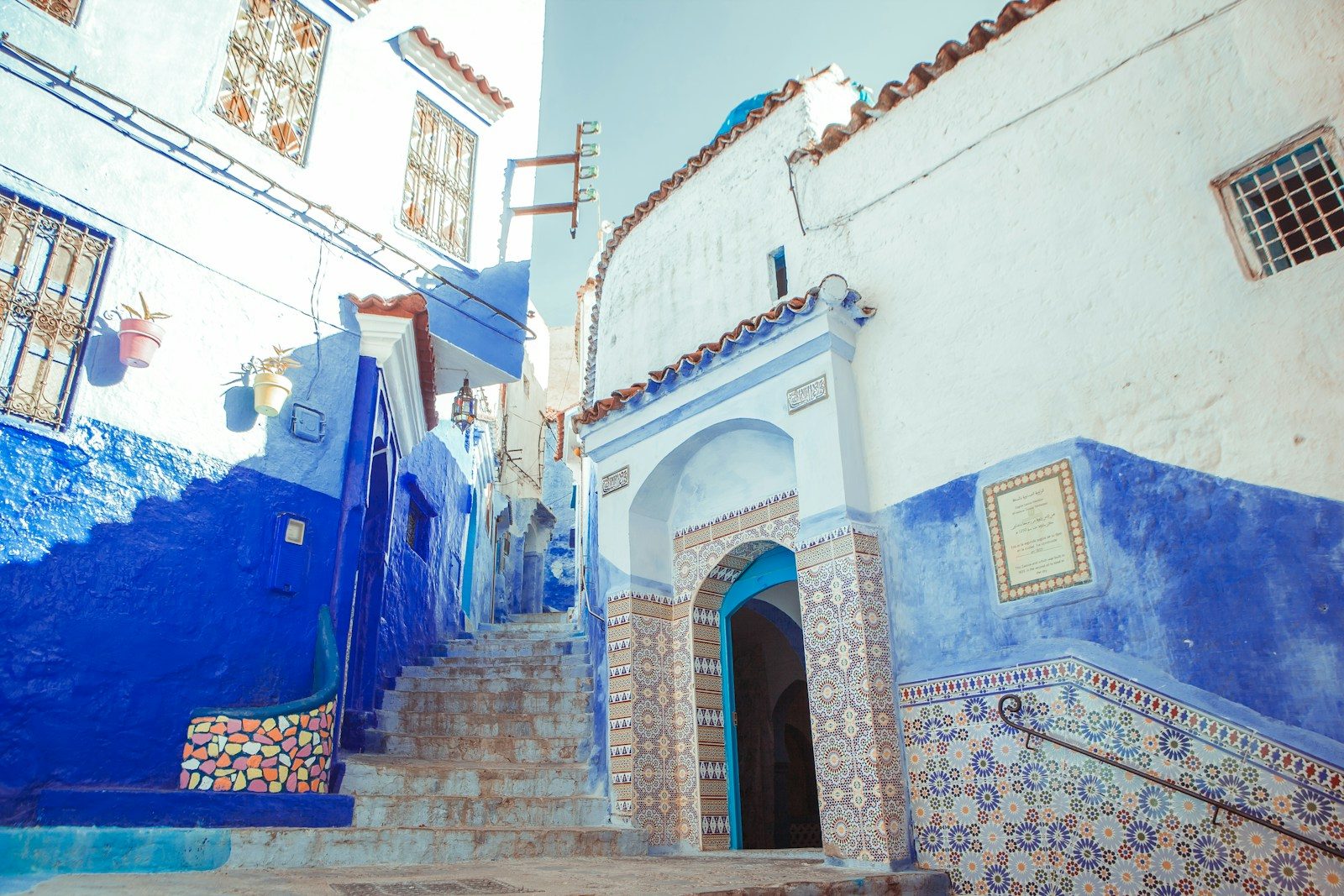
We’d seen the photos—dreamy blue alleys, cats lounging on stairs, doors worthy of a design magazine. But is Chefchaouen worth visiting beyond the Instagram hype? After exploring the Blue City ourselves, we’re sharing what we loved, what surprised us, and what no one really talks about.
Get To Know The Traveling Taylors!
What Makes Chefchaouen So Special
💙 1. It Really Is That Blue
No filters needed. The entire medina is painted in soft shades of indigo, turquoise, and powder blue. It’s both calming and surreal—especially in the morning light. Those first golden-hour tones are so pretty that many visitors like to capture them the old-school way with a fun instant camera like this one.
🌄 2. The Mountain Setting Is Unreal
Tucked into the Rif Mountains, Chefchaouen feels like a secret alpine village with a Moroccan twist. You’re constantly surrounded by dramatic hills, fresh air, and sweeping views. If you love documenting your adventures, a compact wearable camera like this one is an excellent way to capture immersive hands-free POV footage of Chefchaouen, allowing you to record every memorable moment as you explore iconic landmarks, scenic trails, and cultural attractions.
🚶♀️ 3. It’s Walkable and Peaceful
Compared to Marrakech or Fes, Chefchaouen is so much calmer. No cars inside the medina, fewer touts, and a gentler pace—ideal if you need a breather. Since you’ll be covering those hilly cobbled lanes on foot all day, a pair of supportive walking sneakers like these will keep you comfortable. To get your bearings and hear the stories behind the blue walls, you can book a guided medina walking tour.
🎨 4. The Art and Craft Scene Is Authentic
Many of the shops are still run by local artisans, not mass souvenir chains. You’ll find handwoven textiles, pottery, and painting that reflects the region’s Berber influence.
What Surprised Us (And Might Surprise You Too)
😬 1. It’s Small—Really Small
The entire medina can be explored in a few hours. If you’re planning to stay more than 1–2 days, be sure to build in nearby excursions like Akchour or the Spanish Mosque hike. It’s easy to take a guided day trip to the Akchour waterfalls to round out a longer stay.
📸 2. Instagram Crowds Are Real
Popular photo spots can get very busy by midday, especially in high season. If you’re looking for dreamy, quiet shots, early morning is a must. To grab steady, hands-free photos before the crowds arrive, you might want to pack a smart face-tracking phone tripod like this. A local can also help you beat the crowds if you join an early-morning photography walking tour.
🌧️ 3. Weather Can Be Moody
Because of the mountain location, Chefchaouen can be misty, rainy, or colder than expected—especially in winter or spring. A compact travel umbrella like this one is worth tucking into your day bag just in case.
🍽️ 4. Food Is… Just Okay
While there are some gems, the food scene isn’t as vibrant as Marrakech or Fes. Many menus cater to tourists. Still, you can find delicious local goat cheese, mint tea, and the occasional tagine done right. After a day of sampling street eats and sweet mint tea, a portable water flosser like this one helps keep your smile fresh on the road.
Who Will Love Chefchaouen (And Who Might Not)
✅ Perfect For:
- Photographers and creatives
- Couples looking for romance and calm
- Solo travelers wanting a relaxed pace
- Anyone needing a low-key break from city chaos
🚫 Maybe Not For:
- Party seekers or nightlife lovers
- Travelers who get bored easily
- Foodies expecting culinary depth
- Those with limited time who need high-impact destinations
How Long to Stay in Chefchaouen
1–2 nights is ideal. You’ll have time to explore the medina, do a hike or two, and relax into the vibe without running out of things to do.
Day trips from Fes are possible, but they’re long (around 4 hours each way). We recommend at least one overnight stay to really enjoy the atmosphere.
When Is the Best Time to Visit Chefchaouen?
🌼 Spring (March–May): Clear skies, bright blooms, and mild temps. Our favorite.
🍂 Fall (September–October): Crisp air, golden light, and fewer tourists.
🔥 Summer (June–August): Hot but not unbearable—especially compared to southern Morocco.
❄️ Winter (Dec–Feb): Quiet and moody, but pack warm layers! In the colder months, cozy thermal base layers like these make those chilly mountain mornings far more pleasant.
Is Chefchaouen Worth Visiting?
Absolutely—if you know what to expect.
Chefchaouen is not a place to tick off tourist sites. It’s a place to wander, breathe, and feel. The beauty is in the details, the stillness, and the way the blue walls seem to wash the stress off your soul. If you go in with the right mindset, you’ll leave enchanted.
Need more Morocco inspiration? Read our 10 dreamy things to do in Chefchaouen or plan a detour through the energy of Fes Travel Guide.








Share your thoughts with us! Leave a Comment!