
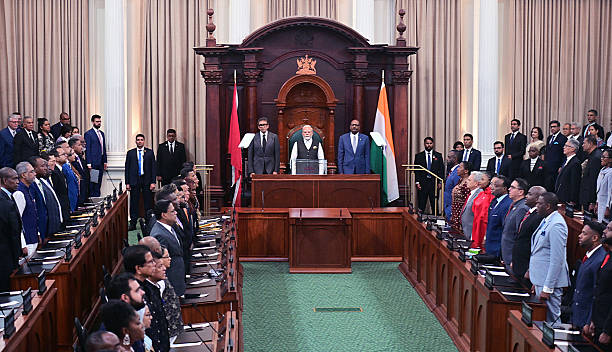
When we visited Trinidad, we noticed how proud locals are of their country’s independence and political identity. Like many former British colonies, the Trinidad Government follows a democratic system influenced by the United Kingdom, but with its own unique structure. Understanding how the Trinidad Government works helps explain how decisions are made in the country and how the political system supports democracy.
Get To Know The Traveling Taylors!
This guide breaks down the structure of the Trinidad Government, including the roles of the President, Prime Minister, and Parliament.
The Trinidad Government operates as a parliamentary republic within the Commonwealth. This means the country has both a ceremonial head of state and a political head of government.
The political system includes three main branches:
- Executive branch
- Legislative branch
- Judicial branch
Each branch of the Trinidad Government plays a different role in running the country and maintaining democratic balance.
Reading about a place is great, but experiencing it in person is even better—and a compact selfie stick tripod like this one makes it easy to capture photos and videos of the country and its people without needing to ask strangers for help.
The Executive Branch of the Trinidad Government
The executive branch of the Trinidad Government is responsible for running the country and implementing laws.
It includes two key leadership roles:
The President
The President of Trinidad and Tobago is the head of state.
Although the role is largely ceremonial, the President performs important duties such as:
- Appointing the Prime Minister
- Approving legislation
- Representing the country at official events
The President is elected by members of Parliament rather than by a public vote.
The Prime Minister
The Prime Minister is the head of government and the most powerful political leader in the Trinidad Government.
The Prime Minister:
- Leads the government
- Sets national policy
- Oversees government ministries
- Represents the country internationally
Typically, the leader of the majority party in Parliament becomes the Prime Minister.
The Legislative Branch of the Trinidad Government
The legislative branch of the Trinidad Government is responsible for creating and passing laws.
This branch is known as Parliament, which consists of two chambers.
House of Representatives
The House of Representatives is the lower chamber of Parliament.
Members of the House are elected by citizens during national elections.
The House plays a major role in shaping legislation and debating national issues within the Trinidad Government.
The Senate
The Senate is the upper chamber of Parliament.
Unlike the House, Senators are appointed rather than elected. They are chosen by the President based on recommendations from the Prime Minister and the Leader of the Opposition.
The Senate reviews legislation passed by the House of Representatives and helps ensure laws are carefully examined before approval.
Together, these chambers form the legislative backbone of the Trinidad Government.
The Judicial Branch of the Trinidad Government
The judicial branch ensures that laws created by the Trinidad Government are interpreted and applied fairly.
The court system includes several levels:
- Magistrates’ Courts
- High Court
- Court of Appeal
The highest court for the Trinidad Government is the Caribbean Court of Justice (CCJ), which replaced the UK’s Privy Council as the final court of appeal.
This system ensures legal independence and protects citizens’ rights under the law.
Elections and Democracy in the Trinidad Government
General elections play an important role in the Trinidad Government system.
Citizens vote for representatives in the House of Representatives approximately every five years.
Political parties compete for seats in Parliament, and the party with the majority typically forms the government.
This democratic process allows citizens to influence leadership and policy within the Trinidad Government.
Major Political Parties in Trinidad
Several political parties compete in national elections.
Two of the most prominent parties in the Trinidad Government landscape include:
- People’s National Movement (PNM)
- United National Congress (UNC)
These parties have historically dominated national politics and shaped the direction of the Trinidad Government.
Why the Trinidad Government System Matters
The structure of the Trinidad Government reflects the country’s history, democratic values, and connection to the Commonwealth.
By combining elements of British parliamentary tradition with its own national identity, the Trinidad Government maintains a system designed to balance leadership, accountability, and representation.
For citizens, this system ensures that elected leaders represent the public and that laws pass through multiple levels of review.
Thinking about visiting Trinidad soon? Travel can be exhausting, which is why many people like using a nourishing body oil like this one to keep their skin soft and hydrated after long days of exploring.
Understanding the Trinidad Government
Learning how the Trinidad Government works offers insight into the nation’s political culture and democratic traditions. From the President’s ceremonial role to the Prime Minister’s leadership and the work of Parliament, each part of the system contributes to how the country is governed. For visitors and curious readers alike, understanding the Trinidad Government reveals another layer of Trinidad and Tobago’s identity—one shaped by history, democracy, and national pride. 🇹🇹











Share your thoughts with us! Leave a Comment!