
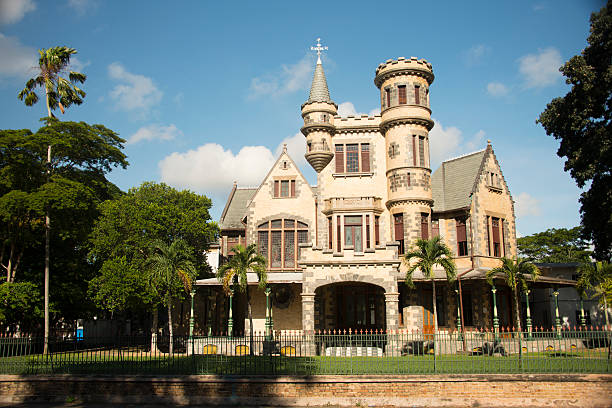
When we visited Trinidad, it quickly became clear that the island’s culture, food, and traditions are deeply connected to its past. From indigenous communities to colonial empires and independence movements, Trinidad history is filled with important events that shaped the country visitors see today. Over centuries, migrations, political changes, and cultural influences transformed Trinidad into one of the most diverse nations in the Caribbean.
Get To Know The Traveling Taylors!
This guide explores 10 key moments in Trinidad history that helped shape the island’s identity.
The story of Trinidad history stretches back thousands of years and includes major cultural and political shifts. Each turning point added a new chapter to the island’s evolving identity.
Many travelers visiting Trinidad choose to commemorate their experience with a keepsake journal like this one, thoughtfully crafted for those who enjoy preserving meaningful memories while recording the stories, history, and cultural traditions of the country and its people.
Ten of the Most Important Moments in Trinidad history
The earliest chapter of Trinidad history begins with indigenous groups such as the Arawaks and Caribs.
1. Indigenous Peoples Settle Trinidad
These communities lived on the island long before European contact. They relied on fishing, farming, and trade with neighboring Caribbean islands and the South American mainland.
Their influence remains an important part of Trinidad history, even though colonization dramatically changed the island.
2. Christopher Columbus Arrives in 1498
A major turning point in Trinidad history occurred when Christopher Columbus arrived in 1498 during his third voyage to the Americas.
Columbus named the island La Isla de la Trinidad, meaning “Island of the Trinity.”
This moment marked the beginning of European involvement in Trinidad history.
3. Spanish Colonization Begins
Following Columbus’s arrival, Spain claimed the island and began the colonial era of Trinidad history.
For several centuries, Trinidad remained a relatively small Spanish colony compared to other Caribbean territories.
However, Spanish rule laid the foundations for later developments in Trinidad history.
4. French Planters Arrive in the 1700s
One of the most important shifts in Trinidad history occurred in the late 18th century.
Spain encouraged settlers from other Caribbean islands to move to Trinidad. Many French plantation owners and enslaved Africans arrived during this period.
This migration greatly influenced the cultural and economic development of Trinidad history.
5. Britain Captures Trinidad in 1797
Another major milestone in Trinidad history happened when Britain captured the island from Spain in 1797.
By 1802, Trinidad officially became a British colony.
British rule reshaped the island’s political system, economy, and infrastructure during the next phase of Trinidad history.
6. Slavery Is Abolished in 1834
The abolition of slavery in the British Empire in 1834 became a defining moment in Trinidad history.
Thousands of formerly enslaved Africans gained freedom, transforming the island’s social and economic structure.
This moment remains one of the most important chapters in Trinidad history.
7. Indian Indentured Workers Arrive
After slavery ended, plantation owners faced labor shortages. To address this, the British brought indentured workers from India to Trinidad starting in 1845.
This migration added a new cultural layer to Trinidad history and helped shape the island’s diverse society.
Today, Indo-Trinidadians form a significant part of the population.
In the early 20th century, the discovery of oil changed the economic direction of Trinidad history.
8. Oil Is Discovered in Trinidad
Oil production became a major industry and remains an important part of the country’s economy today.
This development helped transform Trinidad into one of the more industrialized economies in the Caribbean.
9. Independence in 1962
One of the most significant milestones in Trinidad history came on August 31, 1962, when Trinidad and Tobago gained independence from Britain.
This moment marked the beginning of self-governance and national pride for the country.
Independence remains one of the most celebrated events in Trinidad history. Many travelers enjoy bringing an instant camera like this one to capture Independence Day celebrations, allowing them to print and cherish their favorite moments on the spot.
10. Trinidad Becomes a Republic in 1976
The final major turning point in this list of Trinidad history occurred in 1976.
That year, Trinidad and Tobago officially became a republic, replacing the British monarch with a locally elected president.
This step completed the country’s transition to full political independence.
Why Trinidad History Is So Unique
What makes Trinidad history especially fascinating is the incredible mix of cultures that shaped the island.
Influences from African, Indian, European, Chinese, and Middle Eastern communities all contributed to the traditions seen today.
This blend created a culture famous for its music, cuisine, festivals, and creativity. Many travelers to Trinidad recommend bringing a high-quality travel action camera like this one to capture stunning photos and immersive videos of cultural festivals.
The Lasting Impact of Trinidad History
Many of Trinidad’s most famous traditions—including Carnival, steelpan music, and diverse cuisine—are direct results of the island’s rich and complex past. Understanding Trinidad history helps explain why the country feels so vibrant and culturally unique. For travelers visiting the island, learning about Trinidad history adds deeper meaning to everything from historic landmarks to the lively celebrations found across the country. Once you explore these defining moments, it becomes clear that Trinidad history is not just about the past—it continues shaping the island’s identity today. 🇹🇹











Share your thoughts with us! Leave a Comment!