
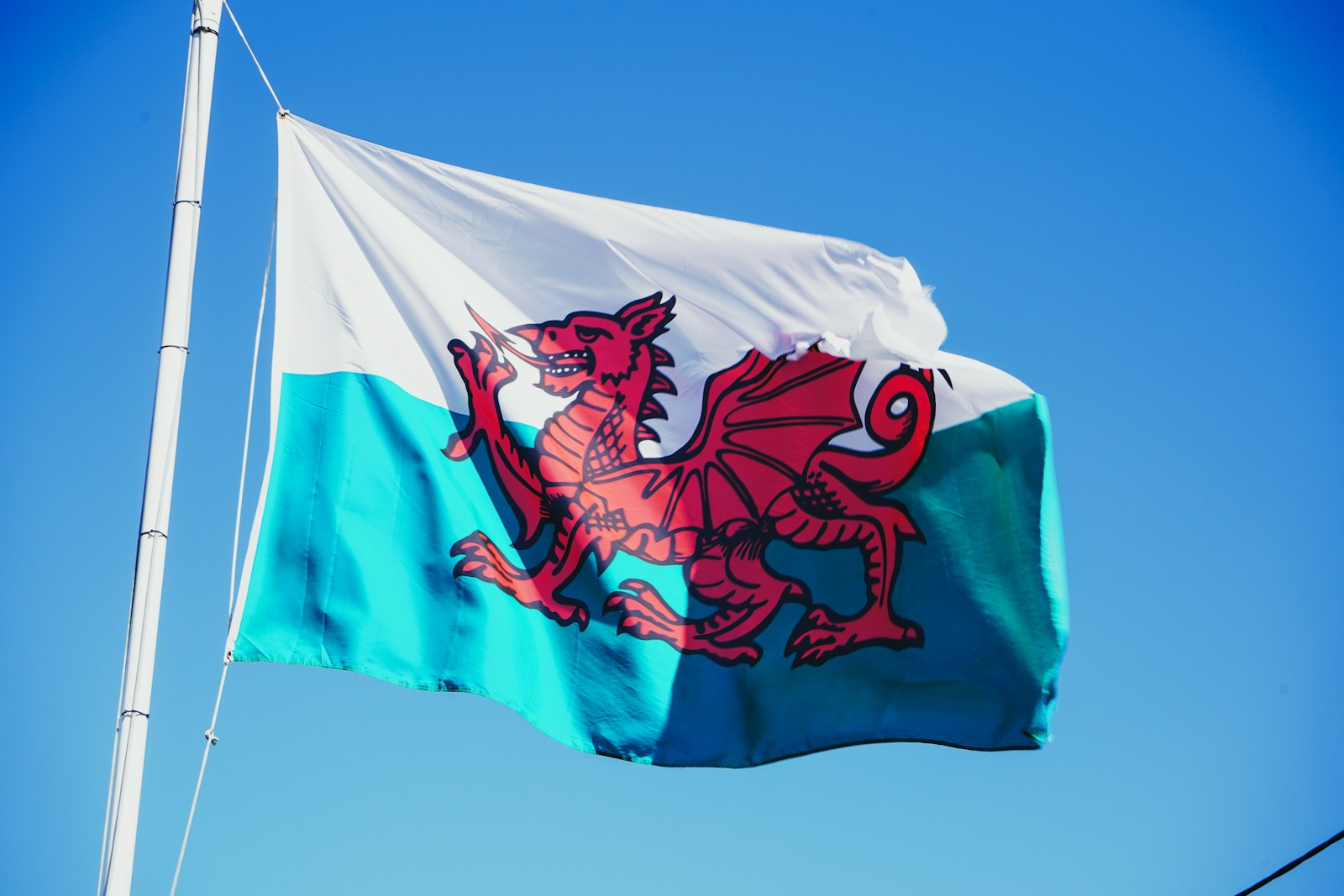
Wales is the only country in the UK with a dragon on its national flag — and it’s not just for show. The Wales flag, officially known as Y Ddraig Goch (The Red Dragon), is bold, symbolic, and steeped in history. But what does the dragon actually mean? And why has it stood the test of time while other flags fade into generic stripes and shields? Let’s dive into the story behind the Wales flag — and what it reveals about the spirit of the nation.
Get To Know The Traveling Taylors!
A Flag Unlike Any Other in the UK
The Wales flag is instantly recognizable: a red dragon on a white and green field. It stands out among other UK flags for its color, symbolism, and striking imagery. While England has a red cross, Scotland a white saltire, and Northern Ireland its own historic banners, Wales stands apart with its bold, mythical creature.
Getting ready to explore Wales for yourself? Capturing travel memories is part of the fun, and an instant camera like this one lets you snap photos and print them right away.
Did You Know? The Wales flag is one of the few national flags in the world featuring a dragon as its central figure.
The Myth Behind the Dragon
The dragon’s roots lie in Welsh mythology. According to legend, a red dragon battled a white dragon beneath Dinas Emrys, a hill in North Wales. The red dragon’s victory was said to symbolize the strength of the Welsh people, while the white dragon represented the invading Saxons.
Story Highlight: This myth was famously told by Merlin (yes, that Merlin) in early Welsh tales, linking the dragon with prophecy and power.
A Symbol of Resistance and Identity
The red dragon became more than myth — it evolved into a symbol of Welsh resistance, especially during the many centuries of conflict with England. Over time, it was adopted by Welsh princes, including Owain Glyndŵr, the last native-born Prince of Wales, as a symbol of rebellion and national pride.
Why It Matters: The Wales flag isn’t just decorative — it represents centuries of cultural survival, defiance, and self-determination.
Tudor Ties and Royal Recognition
When Henry VII, who had Welsh ancestry, rose to the English throne in 1485, he marched under the red dragon at the Battle of Bosworth. This helped embed the symbol in broader British history, though it would still take centuries for it to become the official flag of Wales.
Fun Fact: The red dragon was officially recognized as the national flag of Wales in 1959 — making it a relatively modern official symbol with ancient roots.
What the Colors Represent
- Red Dragon: Power, strength, and Welsh heritage.
- Green and White: Added during the Tudor period, representing the Tudor dynasty (green and white livery) and possibly alluding to the landscape of Wales itself.
Together, these elements form a flag that reflects myth, monarchy, and national pride.
Traveling to Wales in the near future? A small portable charger like this one is another travel essential many people keep in their bag so they always have backup battery power while exploring.
You’ll See It Everywhere — and That’s the Point
The Wales flag isn’t just flown on official buildings. You’ll see it waving proudly at rugby matches, painted on murals, stitched into clothing, and displayed on bumper stickers across the country.
Where to Spot It:
- Cardiff Castle
- Principality Stadium
- Small villages and shops throughout Snowdonia, Pembrokeshire, and the Valleys
Thinking about visiting Wales soon? Having a lightweight backpack like this one makes it easy to carry essentials such as water, chargers, and extra layers while exploring.
Why the Wales Flag Still Matters
The red dragon is more than just a national mascot — it’s a powerful symbol of Welsh resilience, identity, and pride. Rooted in legend but alive in modern culture, the Wales flag continues to unite people across generations. So next time you see it flying against the sky, you’ll know: it’s not just a dragon — it’s a story, a struggle, and a nation in one bold emblem.














Share your thoughts with us! Leave a Comment!