
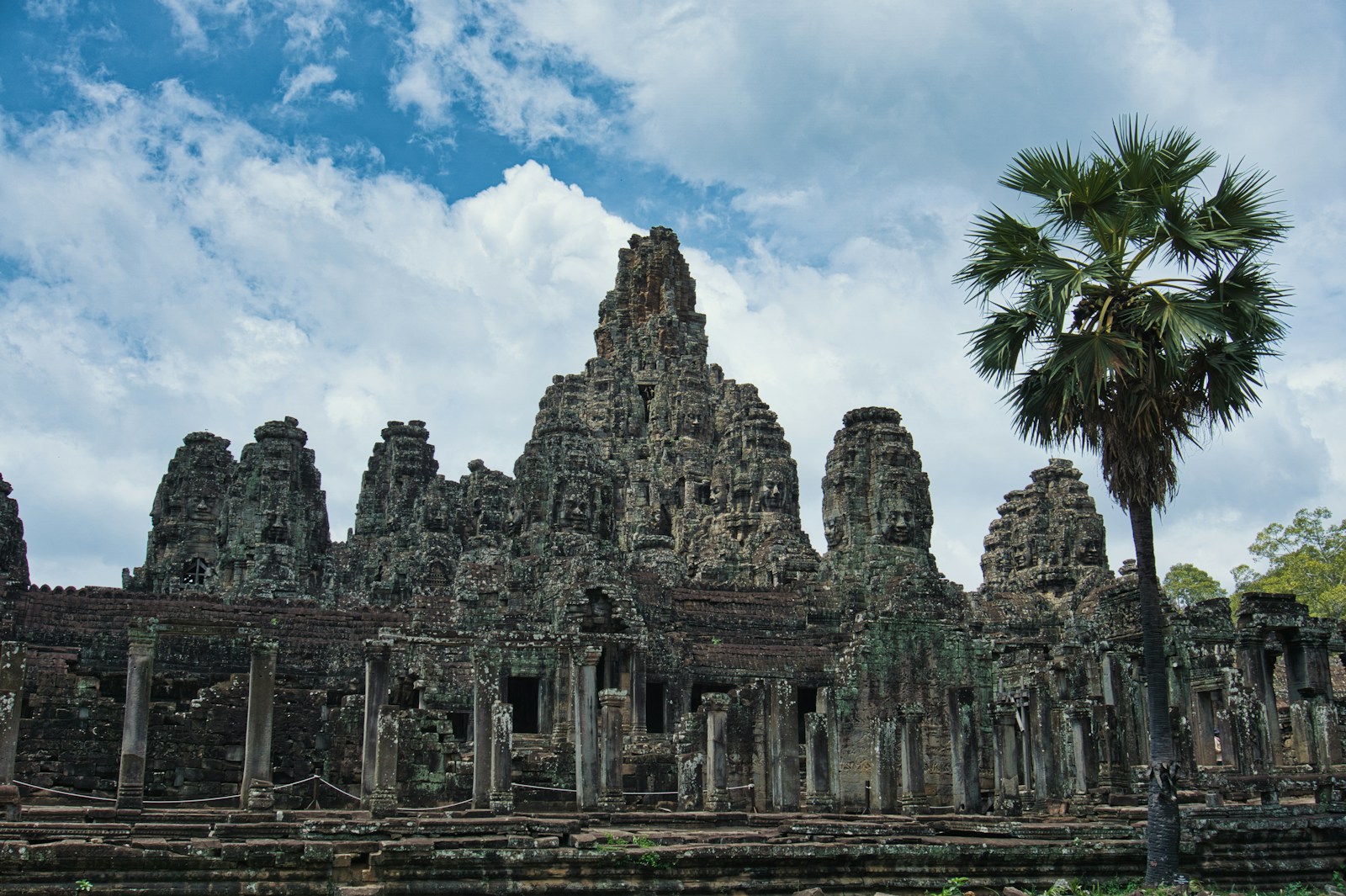
Bayon Temple was one of those places that instantly left us speechless. Tucked in the heart of Angkor Thom, it’s not the largest or most famous of Cambodia’s temples—but it might be the most mesmerizing. With more than 200 stone faces watching from towering spires, Bayon feels like stepping into a sacred dream. Here’s everything you need to know before you visit this surreal and spectacular temple.
Experience Cambodia With Us!
Where Is Bayon Temple?
Bayon sits at the exact center of Angkor Thom, the ancient walled city built by King Jayavarman VII in the late 12th century. It’s part of the Angkor Archaeological Park, just north of Angkor Wat and about 15 minutes by tuk-tuk from Siem Reap. If taking a tuk-tuk to Bayon Temple, make sure you use hydrating sunscreen lotions like this one for protecting you skin since tuk-tuks are open.
You’ll likely pass through the South Gate of Angkor Thom, lined with statues of gods and demons, before reaching Bayon.
What Makes Bayon So Unique?
The Faces. That’s what everyone talks about—and for good reason. The temple features over 50 towers, each adorned with giant stone faces pointing in four directions. These faces are serene, slightly smiling, and absolutely captivating. They seem to follow you as you walk, creating a sense of peaceful omnipresence.
Unlike Angkor Wat’s symmetry and grandeur, Bayon is more complex and layered—almost maze-like, with narrow corridors, steep steps, and sudden views that take your breath away. Many travelers recommend an ultimate travel action camera like this for capturing stunning photos and videos of the faces of Bayon Temple in incredible detail.

What to See at Bayon Temple
1. The Stone Faces
The main event. These faces are believed to represent either Avalokiteshvara, the bodhisattva of compassion, or King Jayavarman VII himself. They radiate peace, strength, and quiet power.
2. Bas Relief Carvings
Bayon also features stunning bas reliefs along its outer gallery. Look for:
- Everyday Khmer life: markets, fishing scenes, cockfighting
- Naval battles and historic conflicts
- Royal processions and spiritual ceremonies
These carvings bring the Khmer Empire’s world vividly to life. For travelers who want high-quality photos and videos of the Bas Relief panels, a lightweight mirrorless camera like this one is a popular choice among content creators and travel photographers.
3. Central Sanctuary
Climb to the inner sanctuary for close-up views of the upper towers and faces. The view from here is striking—especially when the light hits just right.
When to Visit Bayon
- Best time of day: Early morning or late afternoon. The light is softer and the crowds are smaller.
- Avoid mid-day: Tour buses often arrive late morning, and the narrow corridors can get packed. Some travelers who are exploring Bayon during the mid-day hours like carrying a hidden money belt like this one to keep their passport, credit cards, and cash secure.
- Golden hour: The warm tones of sunset bring out the depth in the stone carvings beautifully.
How Long to Spend at Bayon
Plan for at least 45 minutes to 1 hour, longer if you enjoy photography or want to explore the details. It’s part of the popular Small Circuit route through Angkor, often paired with Angkor Wat, Ta Prohm, and Baphuon. To see the highlights in one go, you can take a guided Angkor Wat, Bayon and Ta Prohm day tour.
Tips for Visiting Bayon Temple
- Wear sturdy shoes: The stairs are steep and the stones uneven. Some men wearing men’s hiking boots like these designed for comfort and durability with waterproof protection, slip-resistant traction, cushioned support, and rugged construction for climbing the steep stairs of the temple. On the other hand, many women recommend these women’s durable leather hiking boots built for outdoor adventures with waterproof protection, slip-resistant traction, and cushioned arch support.
- Bring water and sunscreen: There’s limited shade inside the temple and some travelers recommend a sport sunscreen like this one to help provide long-lasting protection.
- Use a guide or app: Understanding the carvings and layout adds so much meaning to your visit.
- Be patient with photos: The best face shots often come when the crowds clear—even if just for a second.
Is Bayon Temple Worth Visiting?
Bayon Temple is a place that lingers in your memory—not because it’s massive or famous, but because it feels alive. The faces aren’t just carvings; they’re quiet witnesses to centuries of history and spirituality. If you only visit one other temple beyond Angkor Wat, let it be this one.
Pair your Bayon visit with our Visiting Angkor Wat: What You Need to Know Before You Go















Share your thoughts with us! Leave a Comment!