

Standing among the columns of the Rabat Grand Mosque, it’s hard not to imagine what could have been. This site, tied to the towering minaret of Hassan Tower, was meant to reshape Morocco’s history and showcase its power to the world. Instead, it became one of the country’s most haunting “what ifs.” Here’s the untold story of the Rabat Grand Mosque. To walk the site with a local guide, you can join a guided medina and Hassan Tower walking tour.
Get To Know The Traveling Taylors!
The Ambition of a Sultan
In the 12th century, Sultan Yacoub al-Mansour of the Almohad dynasty dreamed of building the largest mosque in the world. Rabat was to become the empire’s shining capital, and the mosque would be its centerpiece. You’ll cover a lot of ground exploring this esplanade and the wider medina, so slip into a pair of cushioned walking sneakers like these before you set out.
- The planned mosque would have rivaled Córdoba’s Great Mosque in Spain.
- Hassan Tower, its minaret, was designed to rise 86 meters high—taller than any at the time.
- More than 200 marble and stone columns were laid out, stretching across a vast esplanade.
It was not just a mosque—it was a statement of empire. A full day of wandering these historic grounds drains a phone fast, so I never head out without a compact power bank like this one tucked in my bag.
A Vision Cut Short
Construction began with intensity, but when Sultan al-Mansour died in 1199, work halted almost immediately. Without his leadership and resources, the dream of the Grand Mosque faded.
For centuries, the incomplete structure stood as a reminder of lost ambition. Then in the 18th century, a massive earthquake shook Rabat, toppling much of what remained. Only rows of stone columns and the unfinished minaret survived. The rows of weathered columns make for striking photos, and many travelers found a lightweight mirrorless camera like this one perfect for capturing all that texture and detail.
The Hassan Tower Connection
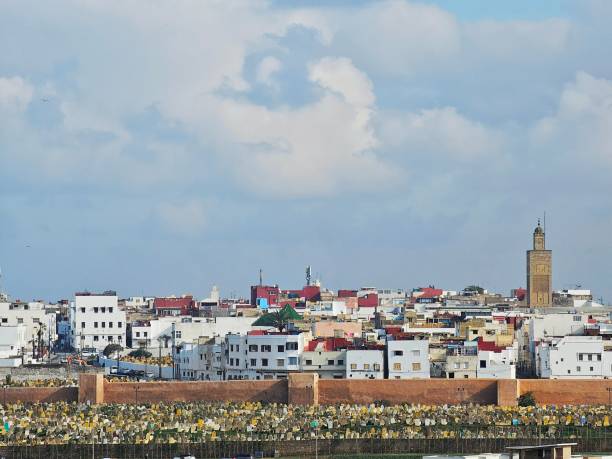
The towering Hassan Tower is all that remains of the mosque’s grand vision. At 44 meters tall, it’s less than half its intended height, but it dominates Rabat’s skyline. Today, it’s both a landmark and a symbol of unfinished greatness.
Visitors can still walk among the columns, seeing the outlines of what could have been the largest prayer hall in the Islamic world. The esplanade is wide open and bright, so a good pair of polarized sunglasses like these makes lingering there a lot more comfortable. If you’d like the tower and mausoleum brought to life, you can book a half-day Rabat city tour.
Why the Grand Mosque Still Matters
Even in ruins, the Grand Mosque is deeply significant:
- Historical Weight – It represents the Almohad dynasty’s ambition and Rabat’s moment as a rising capital.
- Cultural Legacy – The site, along with Hassan Tower, is part of Rabat’s UNESCO World Heritage status.
- Symbolic Contrast – Just steps away stands the Mausoleum of Mohammed V, completed in the 20th century—a reminder of Morocco’s enduring royal legacy.
Experiencing the Grand Mosque Today
When you walk through the open-air esplanade, you don’t just see ruins—you feel a sense of Morocco’s layered history. The unfinished columns cast long shadows at sunset, while the tower looms above, frozen in time. It’s a place for reflection, photography, and imagining a past that never fully came to be. To catch those golden-hour shots hands-free, I lean on a face-tracking phone tripod like this one. To set it all in the wider sweep of the capital’s history, you can take a full-day Rabat history and culture tour.
The Untold Story: A Lesson in Legacy
The Rabat Grand Mosque may never have reached completion, but its story endures. It tells us that ambition can outlive construction, that history is as much about what was imagined as what was built. For visitors, it’s not just a stop on a sightseeing list—it’s a reminder of Morocco’s bold visions, both realized and unfinished.
Planning to visit? Pair the Grand Mosque with our 12 Must-See Rabat attractions guide or explore our Rabat capital city guide 2026 for a deeper look into Morocco’s seat of power.









Share your thoughts with us! Leave a Comment!