
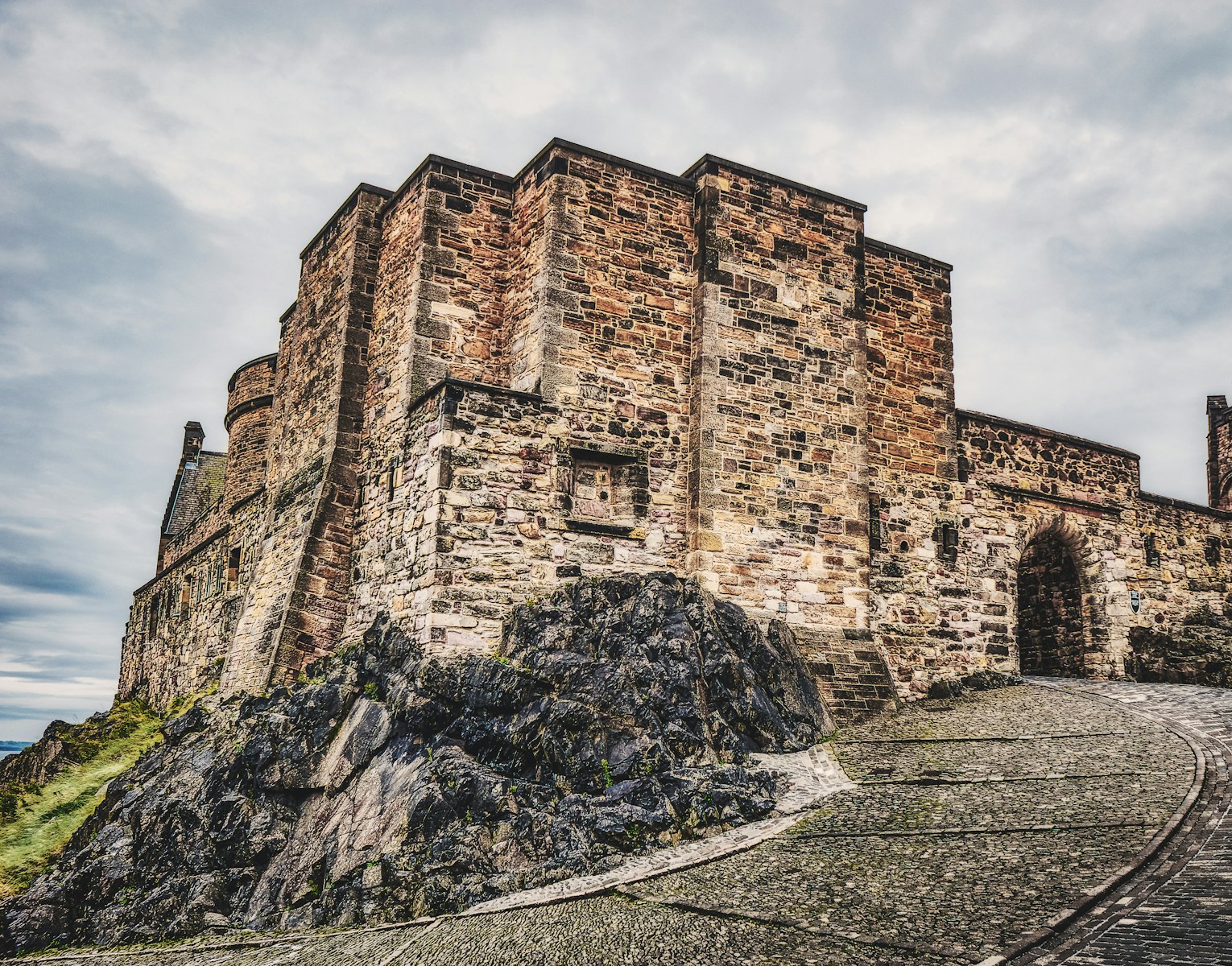
We stood at the foot of Edinburgh Castle Rock, gazing up at its sheer cliff face and wondering—how on earth did this happen? Why does a castle sit on what looks like a mini mountain in the middle of a city? Turns out, the answer goes way beyond architecture. This dramatic outcrop is actually one of Edinburgh’s oldest residents—formed by fire, ice, and time. Here’s how Edinburgh Castle Rock came to be, and why it made the perfect home for a fortress.
Get To Know The Traveling Taylors!
What Is Edinburgh Castle Rock, Exactly?
It’s not just a hill. Edinburgh Castle Rock is an ancient volcanic plug—the hardened core of an extinct volcano that erupted over 340 million years ago during the Carboniferous period.
When the volcano died out, the softer surrounding rock eroded away, leaving behind this incredibly tough lump of basalt and dolerite.
Quick Fact: A volcanic plug is like the leftover cork in a bottle—except it’s made of solidified lava.
How Did the Rock Get Its Shape?
The cliff-like edges and sloped back of Castle Rock were sculpted by glaciers during the last Ice Age.
- ❄️ Glacial movement scraped the north, west, and south sides, leaving steep, defensible faces.
- 🌬️ The east side—more sheltered from the ice flow—eroded gradually, forming a long tail of land. This natural ramp became what we now know as the Royal Mile.
So the city literally flowed out of the rock.
Why Was This Spot Chosen for a Castle?
Long before the stone fortress you see today, ancient people recognized this spot’s strategic power.
- 🛡️ Natural defense: Three steep cliffs made it nearly impossible to attack.
- 👀 Elevated views: At 130 meters above sea level, the summit offers sweeping views in all directions.
- 🏞️ Resource control: It dominates access to water sources and trade routes.
No wonder it became one of Scotland’s most important strongholds.
What to Look For When You Visit
Even if you’re not a geology buff, Castle Rock’s origins come to life when you know where to look:
- 🪨 South-facing cliffs: Notice the jagged, almost vertical walls that made this place such a natural fortress.
- 🥾 Castle Esplanade: From this flat viewing platform, you can see the smooth transition into the Royal Mile’s gentle slope—exactly how the glacier left it.
- 📸 From below: Stand at Princes Street Gardens or Johnston Terrace to appreciate just how dramatically the rock juts out from the city.
Other Famous Features Formed the Same Way
Castle Rock is just one part of Edinburgh’s volcanic landscape:
- Arthur’s Seat: The city’s highest point—another extinct volcano.
- Salisbury Crags: A lava flow cliff shaped by the same forces.
- Calton Hill: A smaller volcanic hill near the New Town.
Edinburgh isn’t just built on history—it’s built on fire.
Why Edinburgh Castle Rock Still Stands Out
Knowing the story behind Edinburgh Castle Rock adds a whole new layer to your visit. It’s not just a scenic perch for the castle—it’s a geological survivor, shaped by eruptions, ice, and thousands of years of erosion. And the best part? You don’t need to be a scientist to see the clues. Just look up—and let the rock tell its story.











Share your thoughts with us! Leave a Comment!